

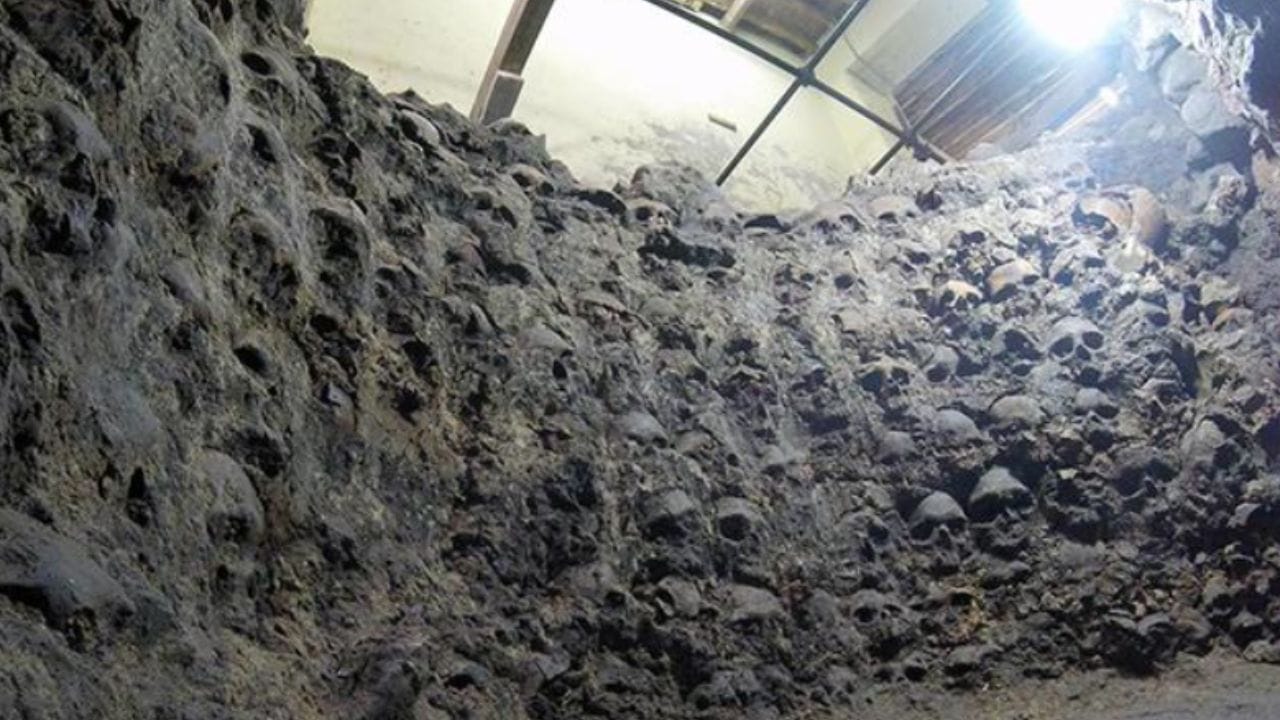
The discovery of a tower built from human skulls in central Mexico offers a remarkable example of Aztec history and sacrificial rituals. This ancient structure, dating to the 15th century, astonishes with its size and complexity, and with the presence of the skulls of women and children, which challenges earlier assumptions about the victims. What lies behind this dark monument?
History and Significance of the Skull Tower
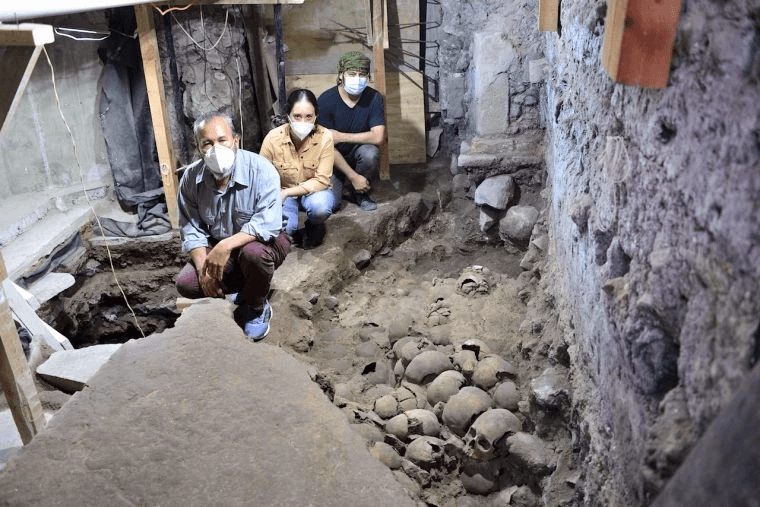
The tower, known as Huey Tzompantli, was built by the Aztecs in Tenochtitlan, the former capital of their state, on the site of today’s central Mexico City. The structure, about 5-6 metres in diameter, consisted of hundreds of human skulls, belonging to war victims and captives offered to the gods in sacrificial rituals. This form of displaying remains served as a public symbol of Aztec power and as a warning to opponents.
Rituals and Victims
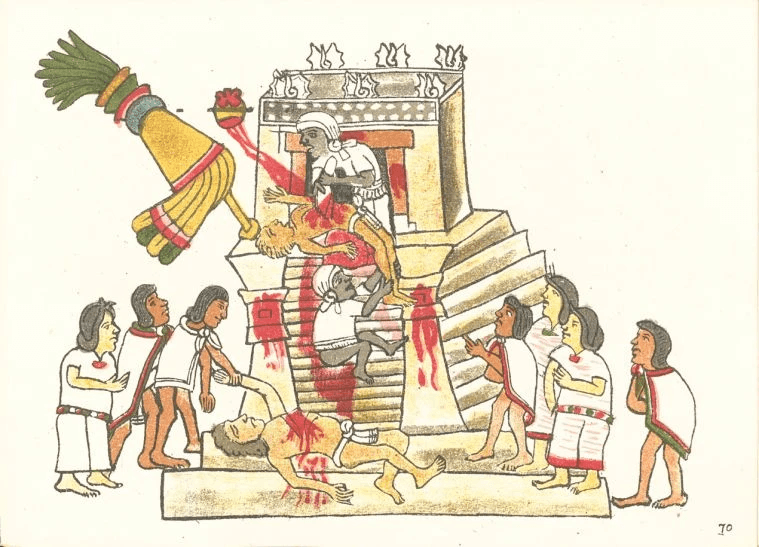
The Aztecs believed that offering human sacrifices maintained the balance of the world and pleased the most important god of the sun and war, Huitzilopochtli. Many of the skulls belonged to warriors, but archaeological finds also revealed the presence of women and children, which points to the diversity of victims and the complexity of Aztec religious practices.
Archaeological Discoveries
The first fragments of the tower were found in 2015 during renovation works in Mexico City. Over the following years, archaeologists uncovered further sections of the structure along with the skulls of more than 600 people. The tower stands right next to the Metropolitan Cathedral, built over the ruins of the Templo Mayor, the most important Aztec sacred complex.
Modern Research
Researchers, using modern techniques, reveal that the tower was built in stages between 1486 and 1502. Anthropological analyses show that the victims were not only warriors but also people from various social groups, which sheds new light on Aztec rituals. The discovery of children’s skulls was a sensation, as it was previously believed that the victims were exclusively adult men.
The Tower's Symbolism and Its Impact
The tower of human skulls was not merely a macabre prop; it was a powerful symbol of Aztec authority and their religious beliefs. For the Spanish conquistadors, it was a terrifying sign that inspired both fear and respect. Today, it is also a fascinating subject of research that helps us understand the complex pre-Columbian culture and its approach to life and death.
The discovery of this tower is a rare and important key to understanding the history of Mexico and one of the most complex civilisations of pre-Columbian America. In the shadow of the Metropolitan Cathedral, a fascinating story unfolds about the beliefs, power and terrifying rituals of a bygone world.




Komentarze