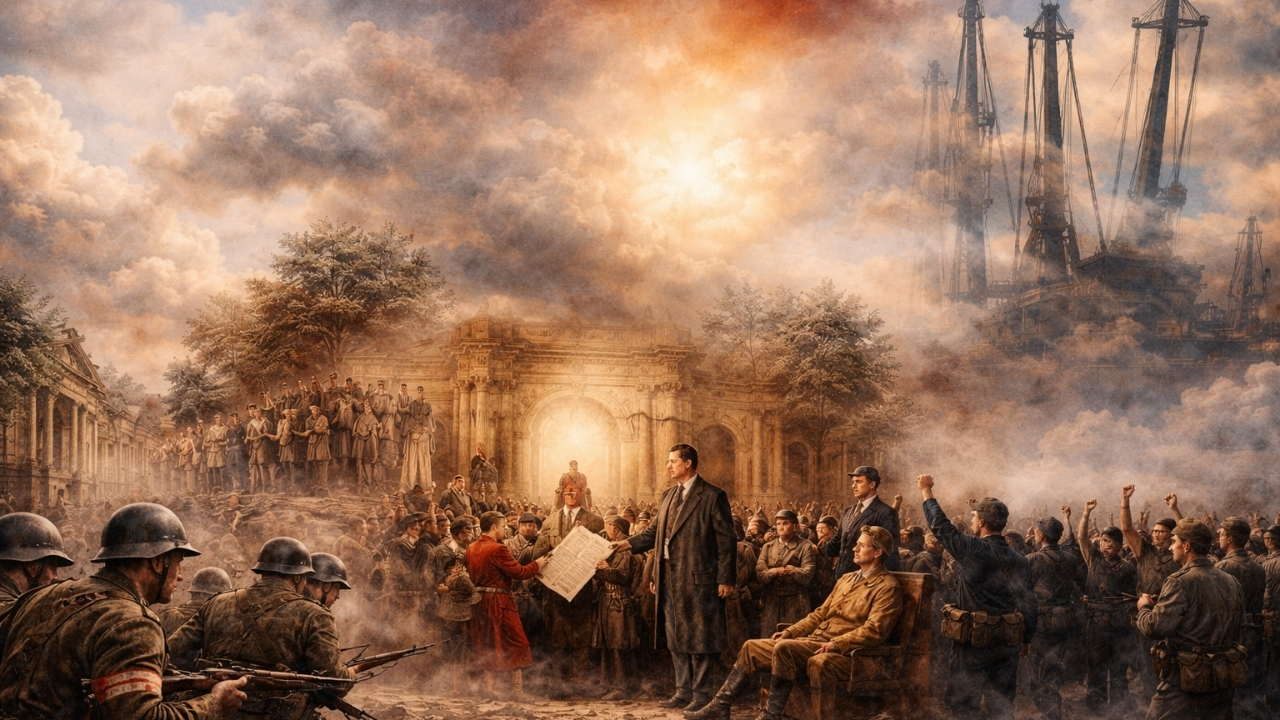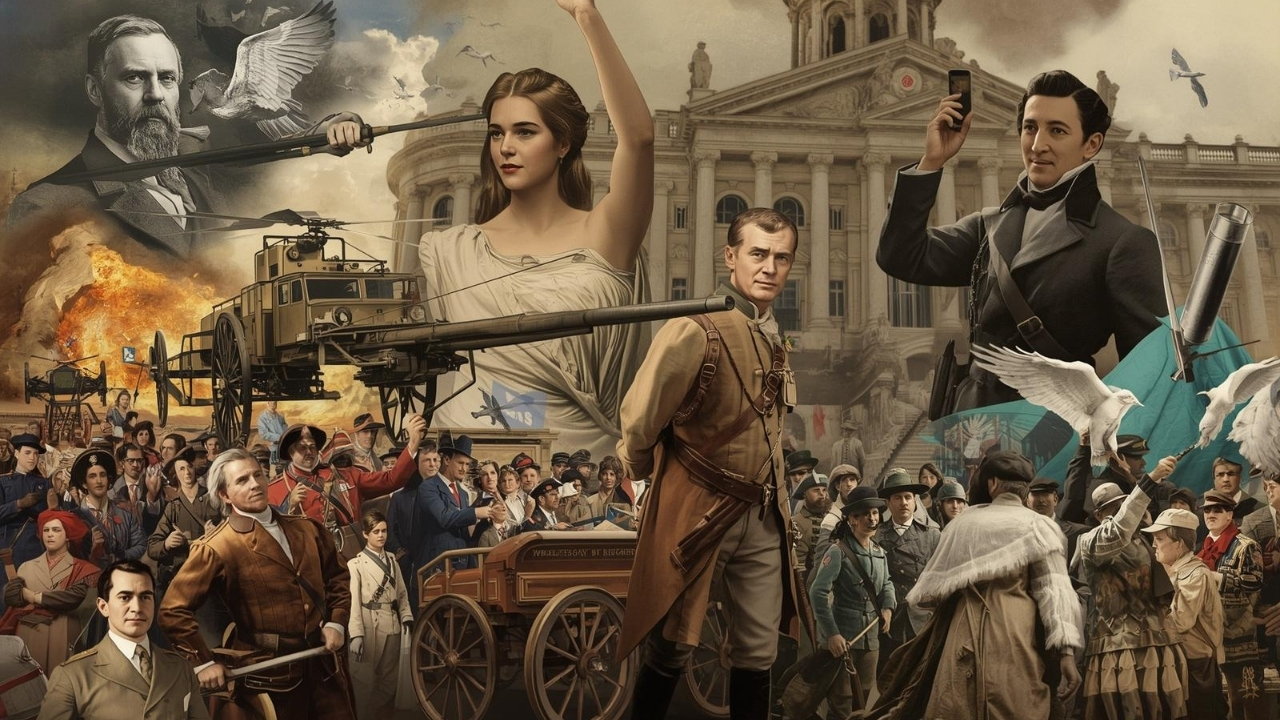
Did you know that one day in a calendar can contain both the first flight of man into space and the birth of Rock and Roll? April 12 is one of those dates that's almost broken in the stitches since the breakthrough moments. — And that's why it's worth checking out what happened that day in history before you move on to your daily affairs. From ancient wars through scientific revolutions to the birth of pop culture icons — This historical calendar will surprise even the greatest lovers of history.
What happened on April 12? Major events in history
1204 – 4th Crusade conquers and plunders Constantinople
It's one of the darkest paradoxes of medieval history. — Instead of fighting the infidels, the crusaders turned the sword against the Christian city. On 12 April 1204, the forces of the 4th Crusade captured and completely plundered Constantinople, the capital of the Byzantine Empire. The robberies, massacres, and destructions were so huge that historians today recognize this day as one of the turning points in the dissolution of the Christian world. This event deepened the gap between the Eastern and Western Churches for centuries.
1633 – Galileo’s trial begins
That day in history, the Roman Inquisition brought a man to justice who dared to claim that the Earth revolves around the Sun. On April 12, 1633 the famous trial of Galileo Galilee began — a scholar accused of heresy for preaching a heliocentric vision of the universe. Although Galileo eventually had to cancel his views, history acknowledged him. It was not until 1992 that the Catholic Church officially rehabilitated the astronomer, admitting that he had made a mistake.
1861 – First shot of the Civil War
When the guns directed at Fort Sumter, South Carolina opened fire on April 12, 1861, no one expected this war to consume more than 600,000 human lives. The Battle of Fort Sumter is considered the first clash of the Civil War, which in four bloody years divided the United States into North and South. This one day changed the course of the history of the world's greatest democracy and eventually led to the abolition of slavery.
1945 – Death of Franklin Delano Roosevelt
Just a few weeks before the end of World War II, April 12, 1945, Franklin Delano Roosevelt died in office — Four times elected President of the United States, one of the architects of the anti-Hitler coalition. The world learned of his departure with disbelief — Roosevelt led America through the Great Depression and through the most difficult global conflict in history. The office was taken over by incumbent Vice President Harry Truman, who made the decision a few months later to drop atomic bombs on Japan.
1954 – Bill Haley records Rock Around the Clock
On April 12, 1954, Bill Haley, along with the group The Comets, recorded a song that went into history as the first real rock and roll hit. "Rock Around the Clock" became the anthem of the generation and opened doors to Elvis Presley, Chuck Berry and all those who changed the face of popular music. One day in the recording studio — And the world of music was never the same again. This historical calendar hides more cultural revolutions than one would expect.
1961 – Yuri Gagarin conquers space
There are several dates that without any exaggeration can be called a breakthrough in human history — and April 12, 1961, it certainly belongs to them. On that day, Soviet cosmonaut Yuri Gagarin embarked on board the ship Wostok 1 and was the first man ever to fly in space, orbiting the Earth in just 1 hour and 48 minutes. His words "They went!" said at the start entered the legend. In honor of this event, the UN General Assembly established on 12 April the International Day of Manned Space Flights.
1981 – Columbia's First Shuttle Flight
Exactly twenty years after Gagarin's flight — And it's not a coincidence, it's a date choice. — On April 12, 1981, he launched Columbia's first space shuttle, starting a new era in space exploration. The Space Shuttle program operated for three decades and performed more than 130 missions, though not without tragedy. Columbia was a symbol of the technological power of the United States and dreams of regular flights into space available to scientists, not just to trained military pilots.
1991 – Warsaw Stock Exchange is established
What happened that day in history in Poland? The signing of the founding act of the Warsaw Stock Exchange. It was a symbolic moment of systemic transformation — After decades of communism Poland officially opened up to the capitalist market economy. The WSE launched seven companies and several transactions a day, and today it is one of the largest exchanges in the region of Central and Eastern Europe. Small founding act, great consequences for the Polish economy.
1982 – Radio Solidarity goes on air
In times of martial law, when censorship and repression stifled a free word, on 12 April 1982 in Warsaw began broadcasting underground Radio Solidarity. It was an act of courage and opposition to the military junta — The illegal public service broadcast news broadcasts and mobilized Poles to resist. Radio Solidarity became a symbol of an incorruptible spirit of society that did not accept silence even in the face of uniforms and detention. This day in the history of Polish journalism deserves a special place.
Born 12 April
Herbie Hancock (1940) – legendary American jazz pianist and composer, one of the most important innovators in jazz history, multiple Grammy Award winner.
Tom Clancy (1947) – American writer, creator of spy thrillers such as "Hunting for Red October" and "Patriot Games", which sold in tens of millions of copies.
David Letterman (1947) – American television icon, host of legendary talk show shows, for decades unquestionable night screen champion in the US.
Andy García (1956) – Cuban-American actor, primarily known for his role as Vincent Corleone in "Godfather III" and in a series of films about the Ocean.
Saoirse Ronan (1994) – an Irish actress, one of the most talented representatives of her generation, nominated for an Oscar several times before her 30s.
World events
1606 – Union Jack Rises – on that day a common flag of England and Scotland was established, joined by a personal union, which became one of the most recognizable symbols in the world.
1796 – Napoleon wins at Montenotte – French army victory over Austrian-Piemonko-Sardinian forces launched a brilliant Italian campaign by young general Bonaparte.
1992 – Disneyland opening near Paris – After controversial debates about "cultural imperialism", Euro Disney opened its gates to the European public, accepting millions of visitors as early as the first year of operation.
2003 – Hungarians vote for the EU – in the historic Hungarian referendum, they decided to join the European Union, which took place a year later, on May 1, 2004.
2009 – End of Maersk Alabama kidnapping – US Navy snipers shot three Somali pirates and freed the captain of a merchant ship held in the Indian Ocean for several days.
April 12 is proof that history does not know boring dates — All you have to do is look into the corresponding historical calendar to discover how many groundbreaking moments have intertwined in one day written down for centuries. From the first man in space, through the birth of rock and roll to dramatic battles and systemic transformations — This day in history tells us that each date contains countless layers of stories. Come back tomorrow, because April 13th has just as much to tell us.