Did you know that April 21st is one of those days in a calendar that every few decades has changed the fate of entire nations, empires and individuals whose names we know to this day? If you are wondering what happened that day in history, we have an answer for you in the form of a cross-cutting historical calendar that dates from the birth of the Eternal City to our modern times. This day in history abounds in so many groundbreaking moments that it is hard to believe that they all fell on the same date. Feel free to read!
What happened on April 21? Major events in history
753 BC – The foundation of Rome by Romulus and Remus
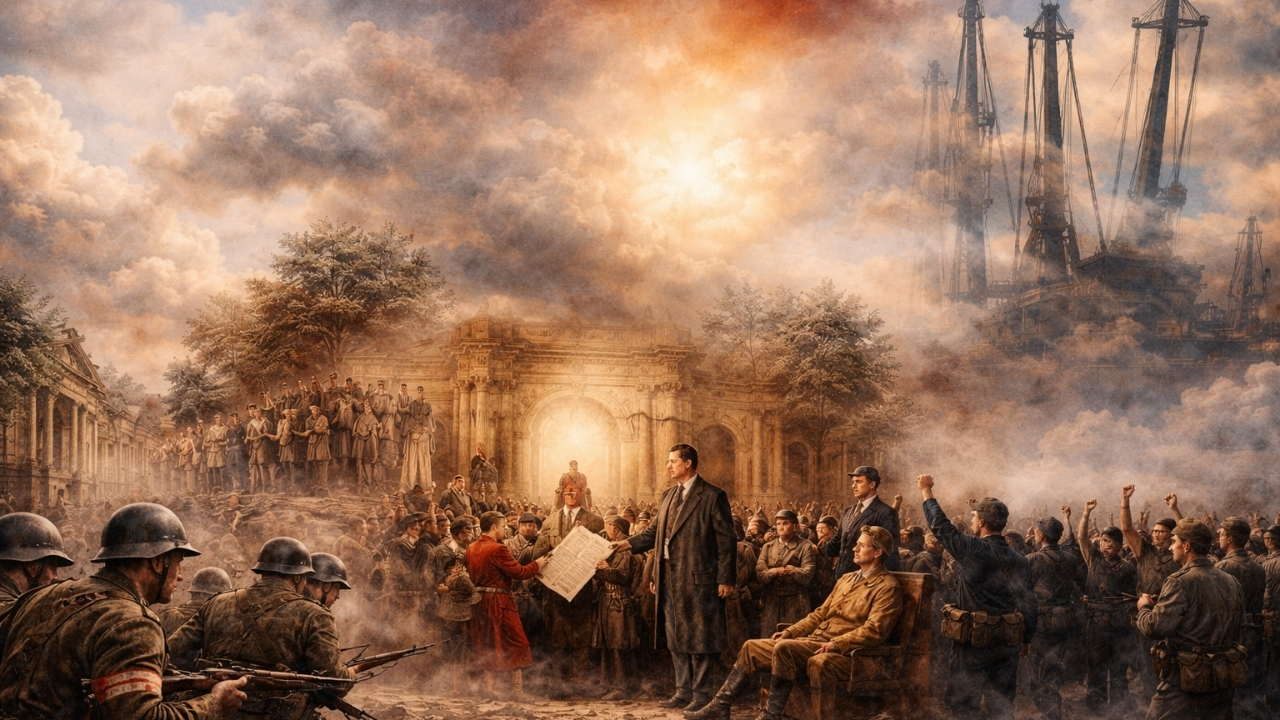
According to tradition, it was on April 21, 753, before our Common Era Romulus and Remus founded Rome — A city that would rule the world for centuries. This date became the basis of the Roman chronological system called Ab Urbe Condita, or "from the founding of the city". Interestingly, the ancient Romans celebrated that day a festival called Parilia, which over time became the solemn anniversary of the founding of the capital empire. It is difficult to have a more symbolic beginning than the one that for centuries defined Western civilization.
1509 – Henry VIII Tudor becomes King of England
On April 21, 1509, one of the most recognizable rulers in history entered the throne of England — Henry VIII Tudor. He was only seventeen when he assumed the crown after the death of his father, Henry VII. His reign forever changed the face of England: breaking up with the Catholic Church, six marriages and the birth of the Anglican Church are only part of his extraordinary heritage. Few remember that at the threshold of government he was seen as a Renaissance ruler with comprehensive interests — Humanist, musician and athlete.
1782 — Establishment of Bangkok
This day in history is also the birth date of one of Asia's most vibrant metropolises. On April 21, 1782, Bangkok was founded, which became the capital of Thailand and the seat of the Chakri dynasty ruling until today. Today, Bangkok is a city inhabited by over ten million people, one of the most visited places in the world. Official, ceremonial city name is the longest village name in the world — counts as many as 169 letters in full.
1836 – Battle of San Jacinto and Texas Independence
The Texas Revolution came to an end on April 21, when the forces of the Republic of Texas crashed Mexican forces in a rapid, eighteen-minute battle at San Jacinto. General Sam Houston led the attack in the middle of the day while Mexican soldiers rested — The effect was devastating. This victory sealed Texas' independence from Mexico and opened the way for later annexation by the United States in 1845. Today April 21 is celebrated in Texas as San Jacinto Day — official state holiday.
1918 – The Death of the Red Baron
Manfred von Richthofen, known worldwide as the "Red Baron", was shot down over France precisely that day in history. The most effective fighter ace of World War I in his account had as many as 80 confirmed aerial victories — a record that was never beaten by any Reich pilot. The circumstances of his death remain a dispute among historians today — it is not known for sure whether it was hit from the ground or by another plane. He was only 25 years old when he died, and was buried with military honors due to the hero's own opponents.
1944 – Women in France gain voting rights
Although many associate women's electoral rights with earlier decades, France — country of Freedom, Equality and Brotherhood — granted women the right to vote only on 21 April 1944, by decree of the Provisional Government of the French Republic headed by General de Gaulle. This was more than twenty years after women in Poland obtained such a right in 1918. The first elections in which French women could participate were held in 1945. This is one of those moments from the historical calendar, which reminds us that civil rights were acquired gradually and with great difficulty.
1960 – Transfer of the capital of Brazil to Brasília
Imagine building from scratch — in the middle of the jungle — the new capital of one of the largest countries in the world. This is exactly what the Brazilians did: on April 21, 1960, the capital was transferred from Rio de Janeiro to the newly built city of Brasília. The whole project was implemented in just four years under the leadership of President Juscelino Kubitschka, who promised voters "five decades of progress in five years". The city designed by urban planner Lúci Costa and architect Oscar Niemeyer is still considered one of the greatest achievements of modernist architecture in the world.
1989 – Game Boy Premiere
What happened that day in history in the world of technology? On April 21, 1989, Japanese Nintendo launched a portable Game Boy console that revolutionized the video game industry forever. The grey, somewhat adamant from today's point of view toy with greenish LCD screen has become a pop culture icon and a starting point for the entire line of portable consoles. To date, over 118 million copies of all Game Boy versions worldwide have been sold. Tetris included in the set is considered one of the best-selling games of all time.
Born 21 April
Charlotte Brontë (1816) – British writer, author of the timeless novel "Jane Eyre", one of the three famous Brontë sisters who permanently entered the canon of English literature.
Max Weber (1864) – German sociologist, historian and economist, recognized as one of the fathers of modern sociology, the creator of concepts such as "protestant ethics" or "perfect type".
Elizabeth II (1926) – Queen of Great Britain reigning for seventy years, longest of all British monarchs in history, symbol of the stability and continuity of the monarchy.
Iggy Pop (1947) – American rock musician, singer and songwriter, called "punk's godfather", an icon of rebellion and nonconformism in popular culture.
Andie MacDowell (1958) – American actress and model, known for her roles in the films "Four Weddings and Funerals" and "The Groundhog Day", one of Hollywood's most recognizable faces in the 1990s.
World events
1749 – The premiere of Händla's "Fire Music" – In London, premiere performance of Georg Friedrich Händel's suite composed for peace in Aachen, accompanied by a spectacular fireworks show.
1921 – First parliamentary elections in Albania – on that day, the first parliamentary elections in Albania were held in history, an important step towards the construction of a modern Balkan state.
1945 – Liberation of Bologna by 2nd Polish Corps – during the Italian campaign, Polish troops commanded by General Anders liberated Bologna, one of the largest cities in northern Italy, thus entering the history of Allied victories on the fronts of World War II.
1996 – Death of Jochar Dudaev – President of the Chechen Republic of Iczkeria died in a Russian missile attack, which was one of the key moments of the first Chechen War and had profound consequences for the further fate of the region.
2019 – Zelenski wins presidential election in Ukraine – comedy actor and screenwriter Volodymyr Zelenski defeated President Petr Poroshenko in the second round of elections, winning over 73 percent of the vote and starting a new chapter in Ukrainian history.
April 21 is a day that once again reminds us how many breakthrough moments can come to one date in the historical calendar — from the birth of civilization to political, technological and social revolutions. This day in history is a true mosaic of human fates, decisions and discoveries that shaped the world as we know it. Look at us tomorrow. — history does not know a day off from surprises!