

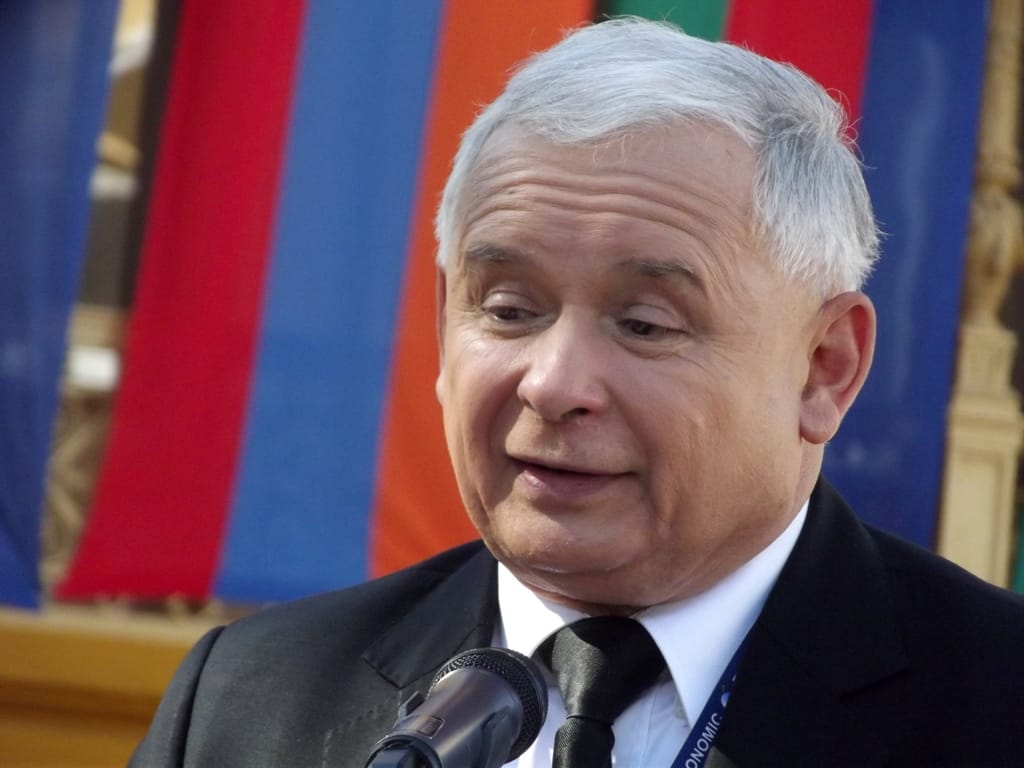
Each month at Piłsudski Square in Warsaw, during the Smolensk monthly commemorations, controversial protesters appear. Jarosław Kaczyński sharply criticises them, calling them “garbage”
Smolensk monthly commemorations – a place of remembrance and conflict
The events commemorating the victims of the Smolensk air disaster have for years divided Warsaw’s community. On one hand, there is a ceremony attended by families, politicians and PiS supporters. On the other – unusual protesters, such as Szczurek or Babcia Kasia, who appear regularly to voice their opposition to the narrative associated with the tragedy.
Who are the “garbage standing here”?
Jarosław Kaczyński, after the latest commemoration, called the counter-demonstrators “collective garbage left over from the Security Service” and stated that special services should deal with them. He also used harsh words about a “place in prison” for the protesters. The protesters usually shout “liar” and “thief”, bring wreaths and banners with offensive slogans, and provoke scuffles. In this way they build an atmosphere that is hard to call a peaceful debate or an expression of concern for democracy.
Strange views or blatant provocation?
The protesters have for years repeated the same slogans, and their actions increasingly balance on the edge of insulting the memory of the victims. Examples include:
- Wreaths inscribed “For Kaczyński, Macierewicz… a bullet in the head”
- Banners mocking the Smolensk tragedy
- Regular disruption of the ceremony by chanting offensive slogans through megaphones
To many people this may look grotesque – comparable to performance art that, instead of encouraging reflection, irritates and provokes conflict. It recalls someone throwing rubbish onto a monument to draw attention to themselves – the action, instead of sparking a discussion, destroys the dignity of the place.
When protest loses its meaning
Of course, the right to protest is the foundation of democracy. However, demonstrations that, instead of substantive arguments, offer offensive gestures turn into a happening that harms the memory of the dead and generates unnecessary tensions. The police often intervene, and stewards prevent the placing of provocative wreaths.
Protest or destruction?
Not every protest is good, and not every demonstration contributes something constructive. When the line is crossed and actions become a form of public destruction – it is hard to be surprised by the sharp reaction expressed by Jarosław Kaczyński. The Smolensk monthly commemoration is not a place for a happening, laughter and mocking death – sometimes firm words are needed to defend the memory of the victims against those who want to spit on it.



Komentarze