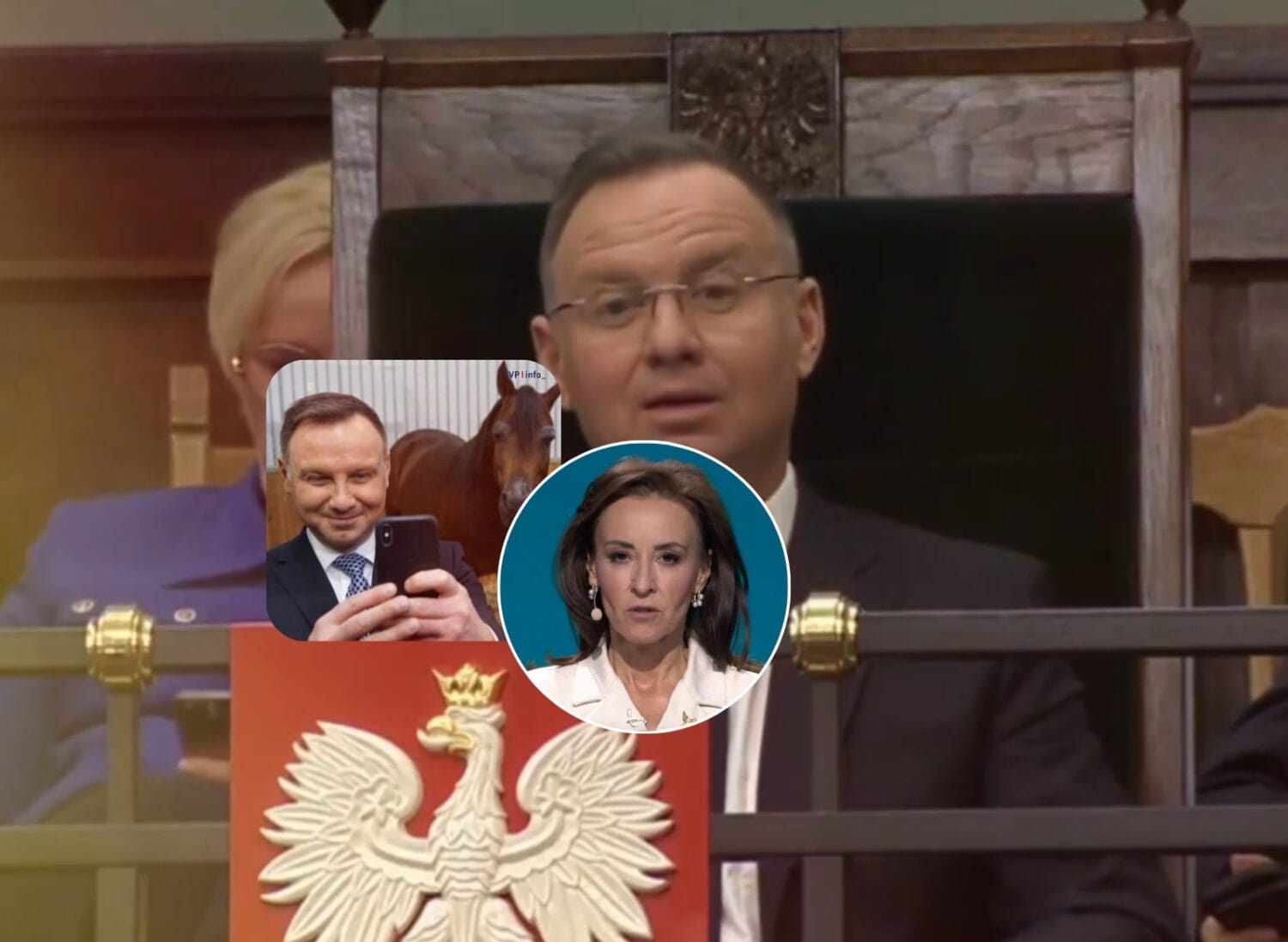
On Thursday, TVP Info released footage summarizing 10 years of Andrzej Duda's presidency. This encouraged the debate on the principles of public media creators, including Dorota Wysocka-Schnepf – a symbol of recent intense changes in TVP.
Public television in the liquidation phase released a program summarizing the presidency of Andrzej Duda. The material caused a storm and questions – do TVP propagandists still have any rules?
TVP Info – from "tube of power" to new propaganda
TVP Info has been associated with a tough line of transmission for years – first as a tool governing the times of the Law and recently as a tool of brutal criticism from journalists favoring the Civil Coalition. Following political changes, TVP is formally "in liquidation", but in practice propaganda is doing well. The latest film attacking President Duda is yet another proof of change that did not clear TV from bias – they just turned the vector and turned the lever the other way.
"Dangerous Relationships" – satire or integrity?
The program began with compilation of blunders and ironic quotes from Duda's presidency – from jokes and unfortunate statements to signing laws in unusual places like the train station in Koński. Among the leading interlocutors, Dorota Wysocka-Schnepf, she raised questions about the competence and autonomy of Andrzej Duda – without shunning clear suggestions and sharp comparisons to historical hate campaigns.
Dorota Wysocka-Schnepf – principles, personality, controversy
Wysocka-Schnepf, a controversial journalist, is considered both a symbol of change and continuity in the stubbornness of public television. Its active participation in recent debates and political relations divides public opinion: some see it as an uncompromising lie-seeker, others argue lack of objectivity. She comments that "the world has changed, the media has changed, and lies must be called lies" – declaring realism rather than radicalism.
- In May, Wysocka-Schnepf held a loud presidential debate, during which she was accused of being biased.
- The allegations of propaganda flow from both sides of the political scene – both during the time of the Law and after the change of power.
- The Polish Journalists Association even awarded her the "Hiena of the Year" anti-reward, accusing her of crossing the limits of journalistic integrity.
Do propagandaists have rules?
Paradoxically, the position of Wysocka-Schnepf – and more broadly: the publicists of the "new-old" TVP illustrates the problem of lack of clear rules in public media. Recent TVP material shows that regardless of the ruling team, the key remains:
- loyalty to current power,
- quickly align tone and language with current political priorities,
- readiness for sharp, often personal attacks on "uncomfortable" politicians.
TVP trapped in its own habits
Recent events in TVP and the attitude of people such as Dorota Wysocka-Schnepf show that the propaganda problem is universal – not belonging to people, but to the entire public media system. Instead of a major reform of remittances and standards, we see further examples of irony and sharp satire. Today it is difficult to defend the thesis that journalists – either left or right – follow clear, unchanging rules. It seems the rules on TVP? Too often they depend on who happens to be in government.