In the age of digital transformation and advanced HR tools, the labour market still surprises with absurd practices that resemble esoteric rather than professional human resource management. One of such stories, which recently ran LinkedIn, has become a symbol of pathologies with which candidates are facing for work. She is told by Elwira Wiśniewska, HR Business Partner and headhunter who specializes in recruitment marketing. Her post sheds light on how the labour market today belongs to employers and not workers, making the search for employment a real challenge.
History with LinkedIn: Numerology as a Recruitment Tool
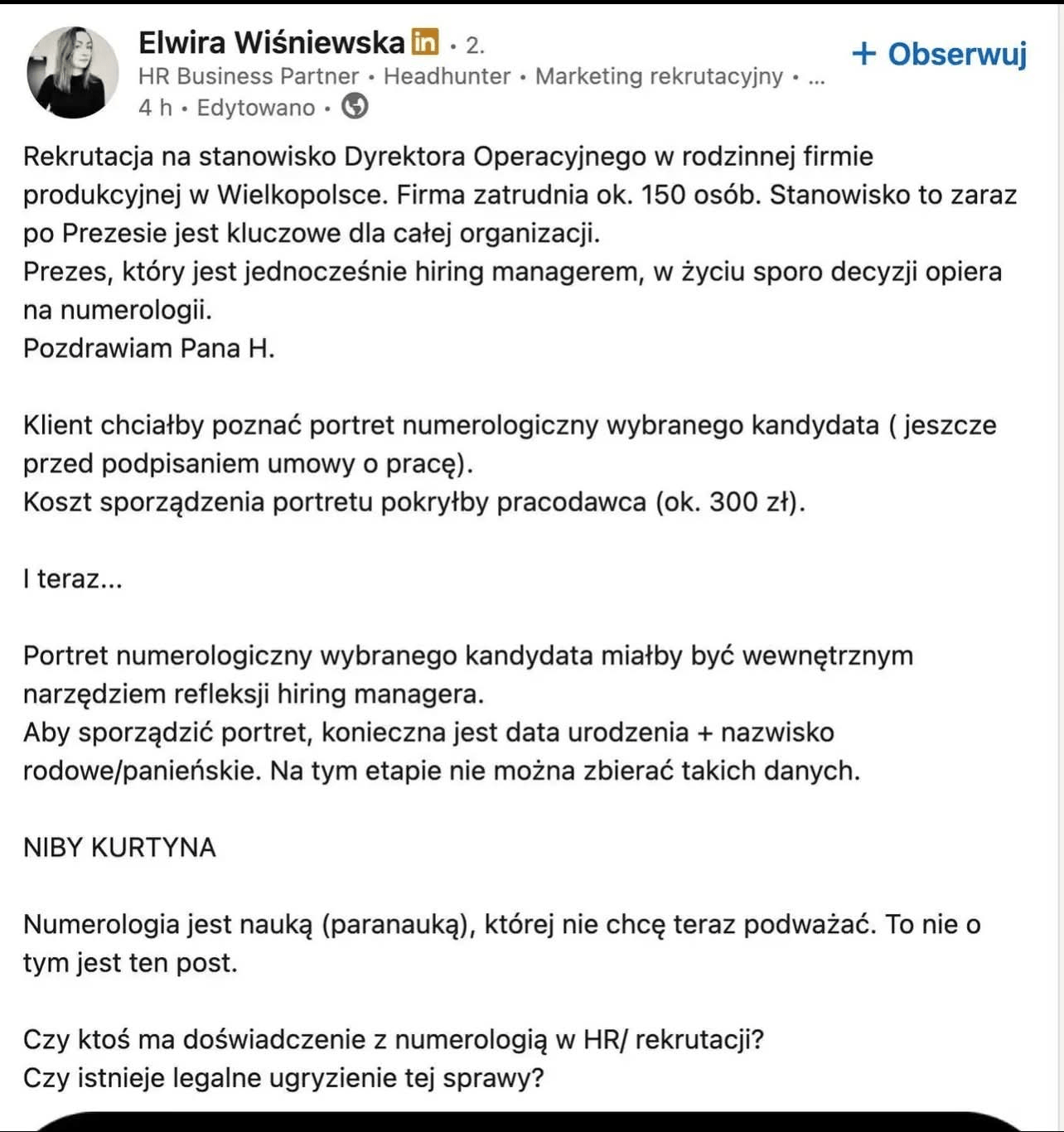
Elwira Wiśniewska describes the recruitment process for the position of Operations Director at a family production company from Wielkopolska, employing about 150 people. This position is crucial for the entire organization, and the company's president also acts as a hiring manager. It would seem that competence, experience and cultural matching are important in such an important decision-making process. Meanwhile, as Wiśniewska relates, the president bases his election on... numerology.
Before signing a contract of employment with the selected candidate, the company demands the creation of a "numberological portrait". The cost of such analysis is about PLN 300, paid by the employer. The portrait is to serve as an internal tool for reflection for the hiring manager, and to prepare it, you need a date of birth and a family or maiden name of the candidate. Wiśniewska emphasises that it is not possible to collect such data at this stage, which complicates the matter further.
The author of the post does not contest numerology itself as a "science" (or parascience), but raises the question of her place in professional recruitment. Ending her entry is an appeal to the LinkedIn community: "Does anyone have experience with numerology in HR/recruitment? Is there a legal bite on this case?" The reactions under the post are numerous – from laughter to outrage to discussions about the limits of privacy and discrimination.
This anecdote is not isolated. LinkedIn, as a professional platform, often becomes a place where workers and recruiters share similar stories revealing hidden labour market absurdities. From personality testing based on astrology to external appearance requirements – such practices show how far we have gone from meritocracy.
Labour market pathologies: The employer market, not the employee
The history of Wiśniewska is just the tip of the iceberg. The modern labour market in Poland and the world has undergone a radical change. Only a few years ago, in the era of the "employee market", candidates dictated conditions – high salaries, benefits, flexible working time. Today, after the impact of the pandemic, inflation and global economic turmoil, the situation has turned 180 degrees. The market belongs to employers, which makes finding a job a real challenge.
First of all, oversupply of candidates. In sectors such as IT, marketing or management, hundreds of people apply for one post. Companies can choose on a CV, which leads to an extension of recruitment processes. Candidates go through multi-stage conversations, tests and tasks, only to hear at the end "thank you, but we chose someone else". As a result, the search for work takes months or even years, leading to frustration and burnout.
Secondly, absurd requirements and lack of transparency. Employers demand not only experience but also "perfect fit" – sometimes based on subjective criteria, as in the case of numerology. Lack of feedback after conversations is normal; candidates invest time and energy without even receiving feedback. In addition, pathologies like ghosting (no contact after promise), low wage offers below market standards, or age, gender, or civil status requirements, which although illegal, still happen.
Third, Impact of technology and automation. Applicant Tracking Systems filter your CV based on keywords, eliminating many qualified candidates. Algorithms, instead of facilitating, often discriminate – e.g. preferring profiles with certain words or experience from "prestigious" companies. In combination with AI in recruitment, new pathologies are emerging, such as generating false job offers or profiling candidates without their consent.
In Poland the situation is particularly difficult. According to CSO data and reports of recruitment companies such as Manpower or Randstad, the unemployment rate among young people exceeds 10% and in some regions is even higher. Companies, especially small and medium-sized ones, like the one from Wielkopolska, often operate in the grey HR area, ignoring personal data protection regulations (GDPR) or the prohibition of discrimination. A request for data as a date of birth under the pretext of numerology may violate the law, but will a desperate candidate decide to complain?
How can you cope in such a market?
For candidates, networking is crucial – LinkedIn is the perfect place to share stories like this Wiśniewska and look for support. It is worth investing in personal branding, specialising in niches and being active in industry communities. Employers should remember that practices such as numerology not only deter talent, but also expose the company to legal and reputational risks.
In conclusion, the LinkedIn story is a funny but bitter example of how the labour market became an arena of employer power. At a time when finding a job requires not only skill but also happiness and mental resilience, it is worth speaking out about pathologies. Maybe this will get the company to reflect – before they reach for another " numerological portrait".