
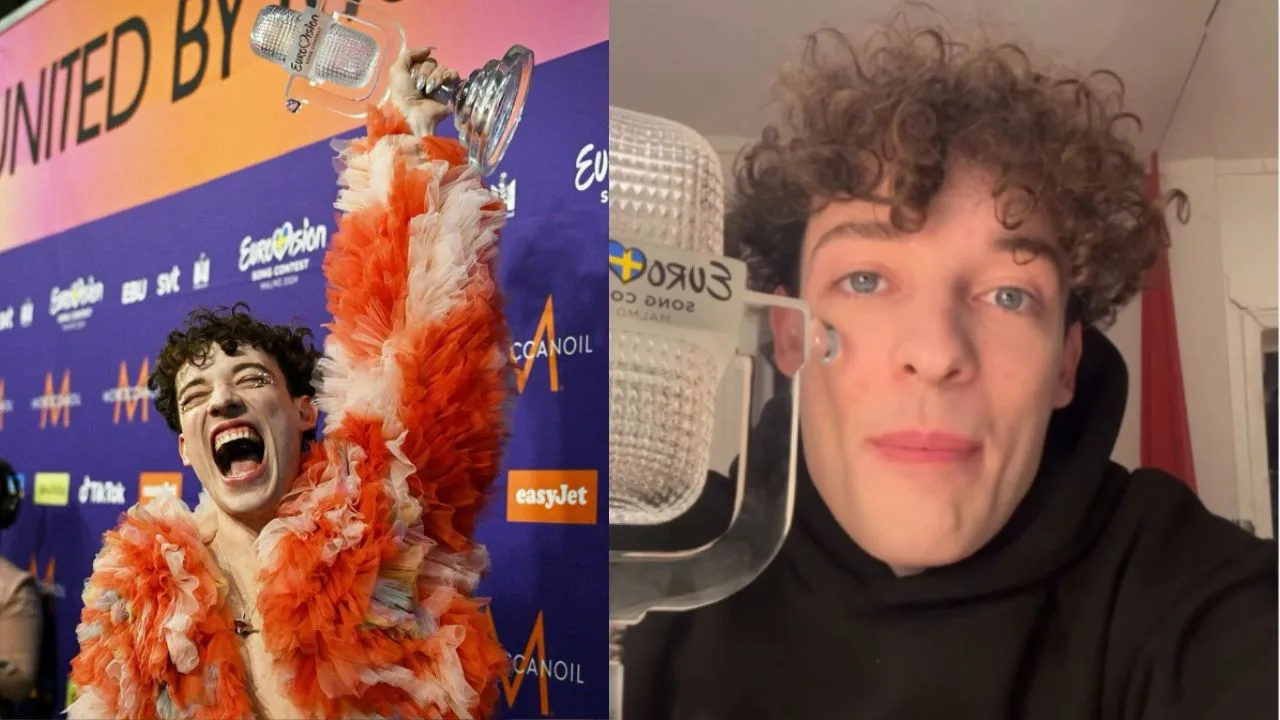
Eurovision 2024 winner Nemo of Switzerland has given up the trophy in protest against the decision by the European Broadcasting Union (EBU) to keep Israel in the contest.
Nemo says "enough" to the organisers’ hypocrisy
The artist, who won Eurovision in May 2024 with the song "The Code", announced on Thursday that he was giving up the trophy. The reason is the European Broadcasting Union (EBU) decision to keep Israel’s participation in next year’s edition, despite ongoing controversy over the country’s actions in the Gaza Strip.
Nemo explained in a statement that he does not want to be part of a "system that pretends to be neutral while selectively applying the rules". He added that Israel’s participation in the contest "normalises violence" and contradicts Eurovision’s values, which declare a commitment to peace and unity.
I will always be grateful to the Eurovision community, the fans who voted, the artists I shared the stage with, and the experiences that shaped me as a person and a musician. This decision comes from care for the values Eurovision promises, not from rejecting the people who make it special. Music still unites us. That belief has not changed. 🤍
Reactions: a flood of comments and artist solidarity
The Swiss artist’s decision has drawn a huge response. Thousands of comments with the hashtags **#StandWithmo and **#BoyttEurovision have appeared on social media.
Some participants of the planned 2025 edition in Stockholm have also announced that they are "considering their steps" if the EBU does not change its position. Fans recall that similar appeals were made earlier regarding Russia, which was excluded in 2022 after its invasion of Ukraine.
EBU defends its decision
In response, Eurovision organisers stressed that "the contest remains a music event, not a political one". The EBU argues that the actions of governments should not affect the participation of public broadcasters in the event.
However, many critics point out that this argument sounds inconsistent, since different criteria were applied in the past to states violating international law.
Media and culture experts note that Nemo’s case may spark a new debate about the political role of Eurovision, which for years has balanced between entertainment and diplomacy.
Is Eurovision no longer apolitical?
Eurovision has long been seen as a festival uniting nations through music, but every year shows that the contest cannot escape its political context.
- In 2016, Ukraine won with a song about the deportation of the Crimean Tatars, which caused controversy in Russia.
- In 2022, Russia was removed from the contest after its aggression against Ukraine.
- In 2024, numerous protests against Israel’s participation and contradictory statements from the EBU emerged.
With his decision, Nemo has simply highlighted that music does not exist in a vacuum – and Eurovision today is as political as it is cultural.
What next for the trophy and Eurovision’s reputation?
Swiss broadcaster SRF confirmed that the artist physically returned the trophy, and that his gesture is of a "purely symbolic nature". The EBU has said it does not intend to punish Nemo, but "regrets that the artist no longer feels part of the Eurovision community".
For many fans and observers, this is a turning point. As one commentator for BBC Culture wrote: "Nemo reminded us that in the world of music, silence can also be a stance. He chose to make his gesture louder than any song."