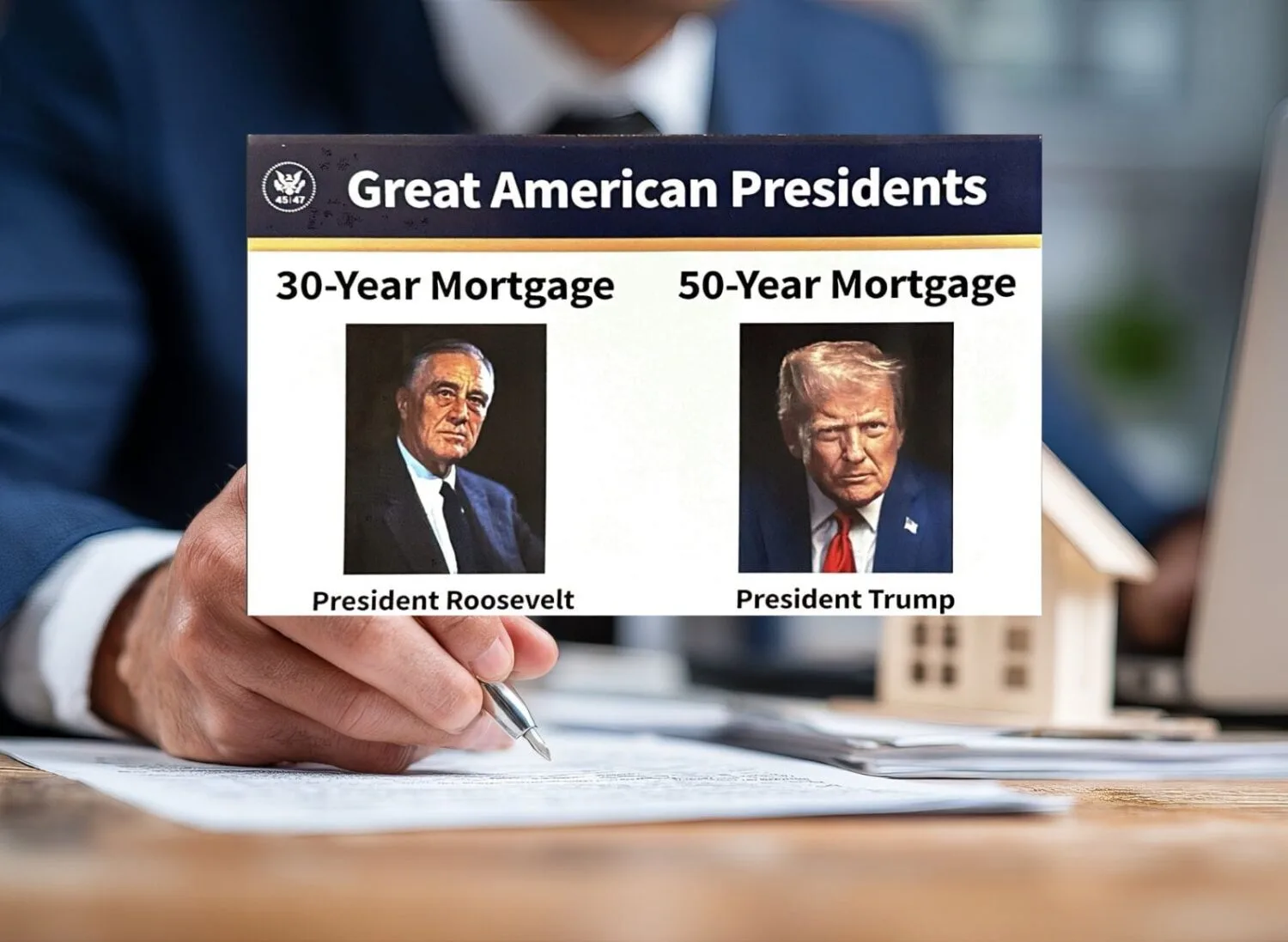
Donald Trump has announced 50-year mortgages in the US, sparking debate over their impact on the housing market and Americans’ finances. The new long repayment period is meant to lower monthly payments, but questions are being raised about total interest and market stability. In this article we look at what it means for borrowers, who introduced 30-year mortgages, and the links to the 2008 crisis, depicted in the film „The Big Short”.
A new mortgage era: 50-year loans in the US
The Donald Trump administration is working on a plan to introduce 50-year mortgages, which is meant to help younger generations in particular buy a home amid today’s high prices and interest rates. The Federal Housing Finance Agency (FHFA) has confirmed that it is a „complete game changer” for housing affordability. The model aims to lower monthly payments, even though total interest will be higher over the long life of the loan.
Why 50 years?
Lower monthly payments will allow for better access to housing.
Current 30- and 40-year loans are often hard to afford at high rates.
Trump compares this to the groundbreaking introduction of 30-year loans during the Great Depression by Franklin D. Roosevelt.
30-year mortgages – how did it start?
The standard 30-year mortgage appeared in the US in the 1930s as part of the New Deal, introduced by President Franklin D. Roosevelt. It was meant to stabilise the housing market after the Great Depression, enabling people to repay over longer and safer periods. Legislation such as the National Housing Act of 1934 and the creation of the Federal Housing Administration (FHA) supported access to long-term home financing.
New media post from Donald J. Trump
(TS: 08 Nov 13:10 ET) pic.twitter.com/ZyRrCw1JeD
— Commentary Donald J. Trump Truth Social Posts On X (@TrumpTruthOnX) November 8, 2025
What was groundbreaking?
A fixed interest rate for up to 30 years, which limited the risk of rising payments.
Banks had greater certainty thanks to FHA insurance.
Home ownership became more realistic for many Americans.
Mortgages and the 2008 crisis
The 2008 financial crisis was caused, among other things, by the mass issuing of risky mortgage loans, which were then passed on to the securities market (mortgage-backed securities). The film „The Big Short” shows how investors predicted the collapse of this market due to a price bubble and poor bank practices.
— Michael Burry Stock Tracker ♟ (@burrytracker) November 8, 2025
What happened?
Banks lent money to people who could not repay it.
These loans were sold to investors as safe assets.
After the bubble burst, property prices fell and the wave of bankruptcies spread across the entire financial system.
What does a 50-year loan mean for American borrowers?
The main effect of a longer repayment period is a lower monthly instalment, which may increase access to housing. However, a longer loan means a larger total amount of interest to pay. Amid high interest rates, many people may consider a lower monthly payment more important than the total cost of the loan.
The bank, when it finds out you accepted its 50-year mortgage at a 17% interest rate.
Possible slowdown in building equity in one’s home
50-year mortgages are an idea intended to improve housing affordability amid rising prices and interest rates. The model for this solution is the 30-year loans introduced during the Great Depression by Roosevelt. While lowering monthly payments may be beneficial, a long repayment period requires a conscious approach to interest costs and housing market risk.
The historical lessons of the 2008 crisis remind us that ease of borrowing should go hand in hand with responsibility and financial stability.