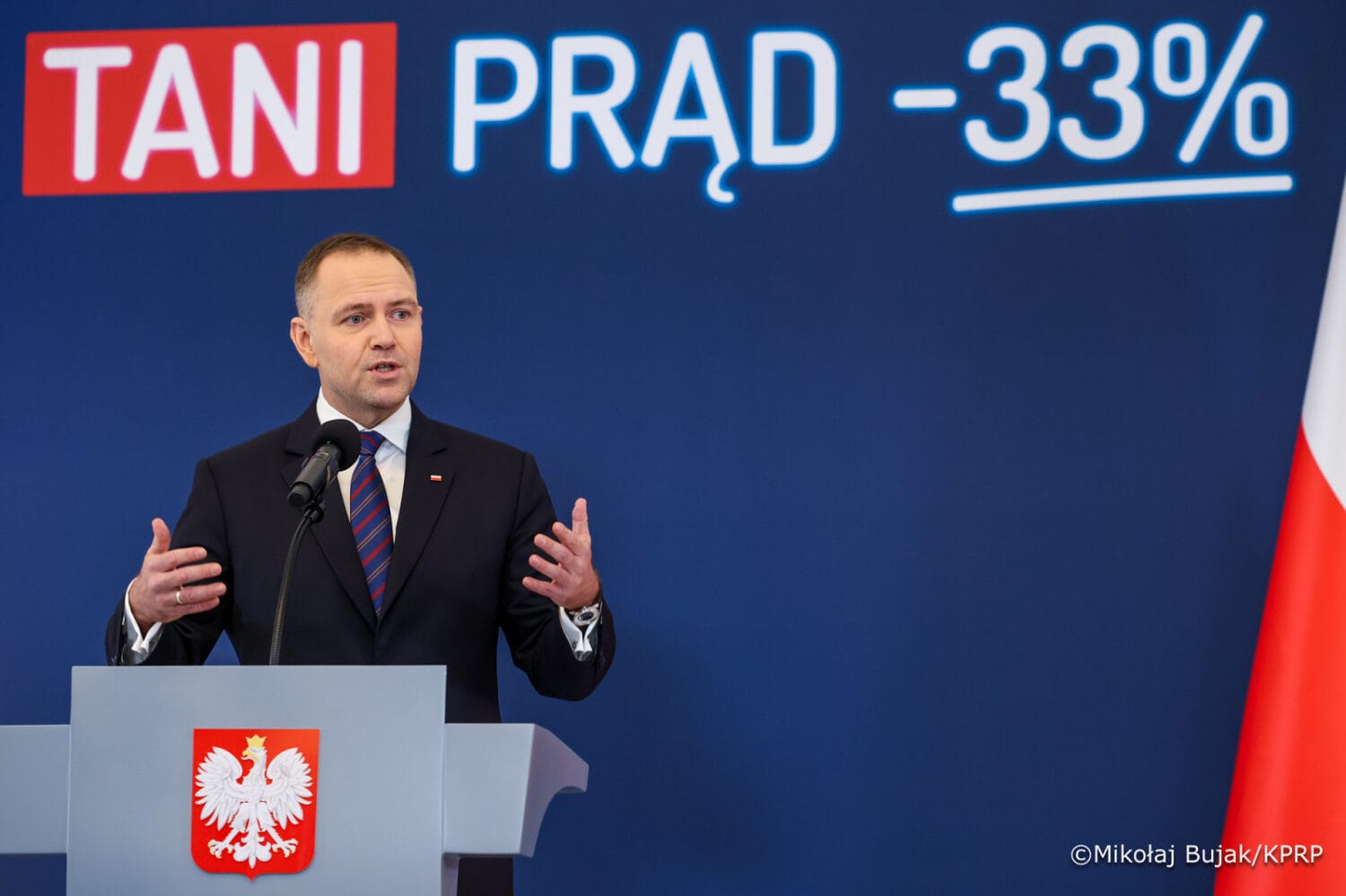
Karol Nawrocki signed the initiative "Tani current -33%", which aims to significantly reduce electricity bills for all Poles. Will the bill come into force, what must happen and when can we count on cheap electricity? See what scenarios are possible and what the presidential project contains.
Will "Tani current -33%" become reality?
The project "Tanish current -33%" provides for the freezing of electricity prices at a favourable level for households – about PLN 500 per MWh net by the end of 2025.
When can the bill enter into force?
According to the latest information, the bill has already gone to the Sejm and is waiting for action. In practice, this means several necessary steps:
- Opinion of the Legislative Office
- Voting in the Sejm
- Senate Decision
- The President's final signature
What must happen to the bill coming into force?
Legislative process – formalities and policies
There are several formal requirements before the bill. The project must obtain:
- Positive opinion of the Legislative Office.
- Support for the parliamentary majority.
- No formal errors or need to be completed.
Potential compromise between the President and the Government
A script in which the Prime Minister will support the President's bill in exchange for other solutions is possible – especially since earlier energy projects (e.g. Windmill Act) were the subject of political trade fairs and personnel veto. The government could support Nawrocki's project if, for example, it obtained support for other key laws.
Will Parliament agree?
Support for cheaper electricity is large among both politicians and citizens – this is confirmed by a survey in which as many as 56% of Poles advocated signing a bill guaranteeing the freezing of energy prices. However, a political game can prolong the legislative process.
What are the assumptions of the law "Tani current -33%"?
- Household electricity bills would remain frozen at 500 PLN/MWh net by the end of 2026.
- The Act provides for compensation to energy retailers financed by the COVID-19 fund
- The G-tariff (households) have the most to gain – the reduction applies to both the G11 single zone tariff and the G12 double zone tariff.
- Distribution fees remain unchanged and the G tariff capacity fee is 0 PLN.
Key points of the bill
- Freezing of energy prices by the end of 2026.
- Compensation to electricity retailers
- No changes in the compensation mechanism
- Protection of the poorest households by additional support (e.g. heating voucher)
Possible policy scenarios
- Fast legislative path – passed by the Sejm and the Senate, the President's signature by the end of September.
- Political compromise – support of the bill by the government in exchange for signing a key bill for the government.
- Protracting the procedure – if formal errors or additional conditions arise from the government.
- The political game for details – the possibility for Parliament to introduce amendments, which will prolong the implementation process.
Table: Key legislative scenarios
| Screenplay | Chance of implementation | Waiting time |
|---|---|---|
| Quick resolution | High | 2-4 weeks |
| Political compromise | Average | 1-2 months |
| Parliamentary amendments/games | Average | 2 months+ |
Will electricity be cheaper?
If the bill passes through the Sejm and the Senate and the President signs it, Poles should expect lower bills as early as the first quarter of 2026. If the price is frozen at 500 PLN/MWh, savings for the average family can reach about 30-33% of current rates.
Summary
The introduction of the Law "Tani current -33%" depends on the decision of parliament and political compromises. The most important is to follow the next legislative steps – it will be there to determine whether Poles will actually pay much less for electricity this year. If the project receives support, it can quickly enter into force and actually cut bills – that is what most citizens count on.