

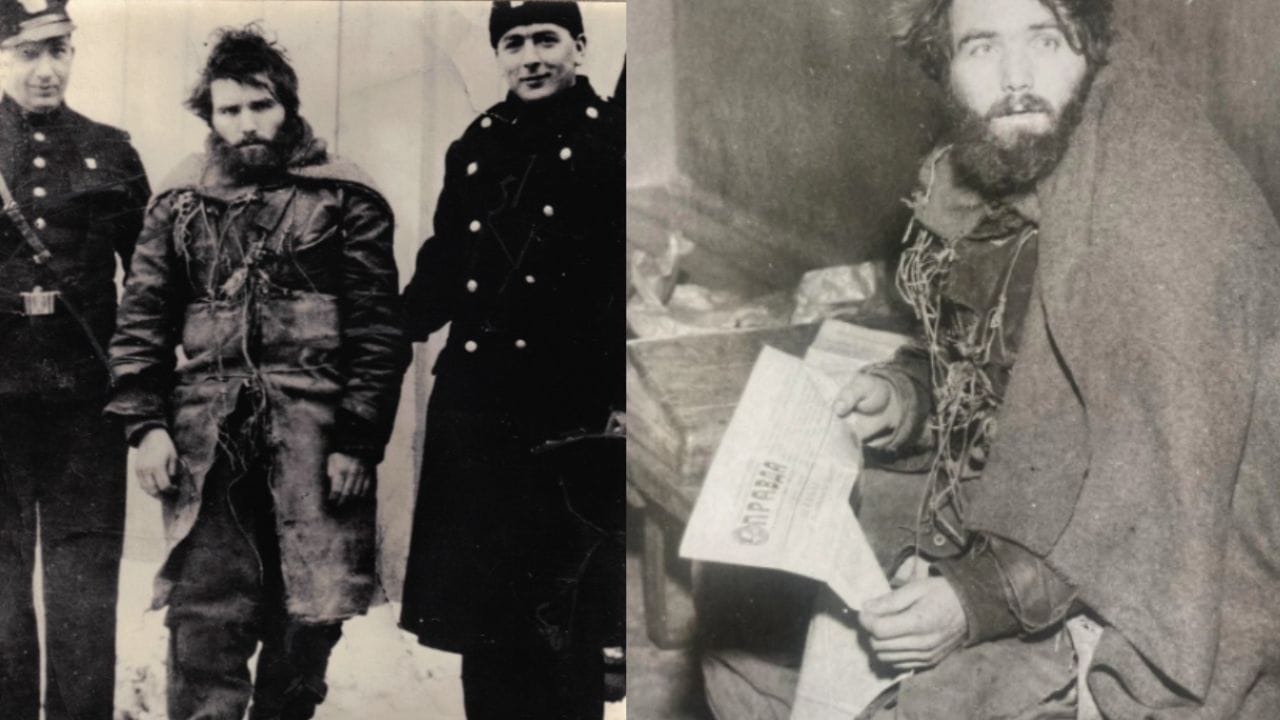
Finding a prisoner of war years later seems unlikely, yet history shows that wartime fates can surprise even years after the fighting ended.
War, Captivity and a Lost Life
Vasili Rambowski was a Red Army soldier who was taken prisoner of war in 1941. He was moved between various camps in Poland, and in 1944 he was sent to a camp in Norway.
He escaped from the Norwegian camp and survived in the forest until 1947, not knowing that the war had ended. That same year, he was finally found by the Norwegian police.
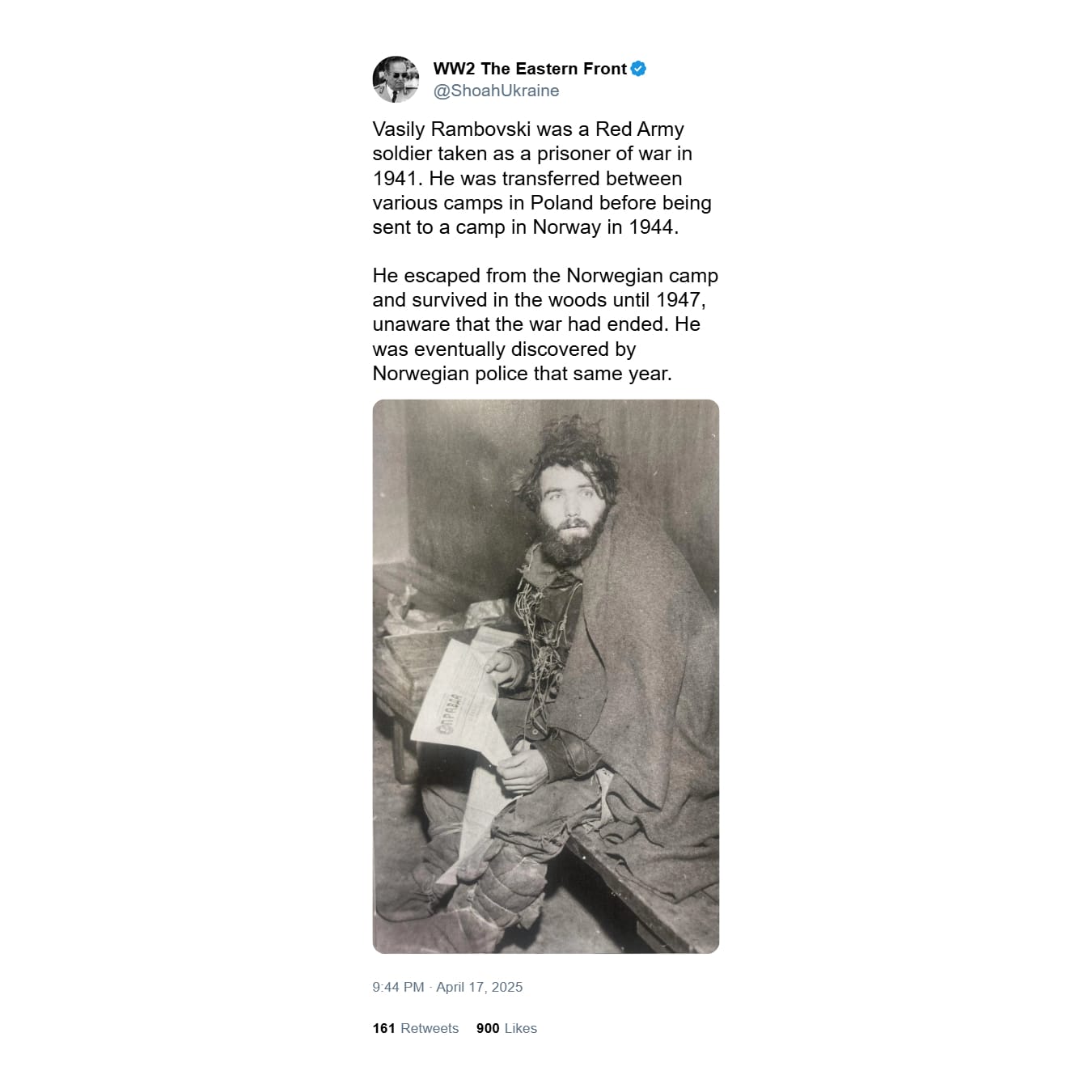
Vasili Rabkowski, a Red Army soldier, was captured towards the end of World War II. Like thousands of other Eastern European soldiers, he was first taken to a German prisoner-of-war camp, and then handed over to Soviet captivity. For many, this meant passing through filtration camps and being suspected of collaborating with the enemy. Rabkowski disappeared without a trace – he was officially declared dead, and his family plunged into mourning.
Missing Prisoners – The Fate of Thousands
- During World War II, as many as 5.7 million Soviet soldiers were taken prisoner.
- Many never returned to their homeland, dying in camps or remaining missing for years.
- After the war ended, not everyone was found right away – the fates of some were only clarified decades later.
Found After Years
A prisoner of war was found three years after the end of World War II. In autumn 1944, Ukrainian prisoner Vasili Rambowski escaped from the Moan camp near Levanger in Norway. For two harsh winters he survived alone in the forests, enduring extreme cold and isolation. In 1947 he was found in a barn in Bymarka, in Trondheim – he was terrified, emaciated and dressed in rags. A photograph taken that day shows him at the moment he was taken in by the police and transported to a hospital. Unaware of the passage of time, he did not know that the war was already over.
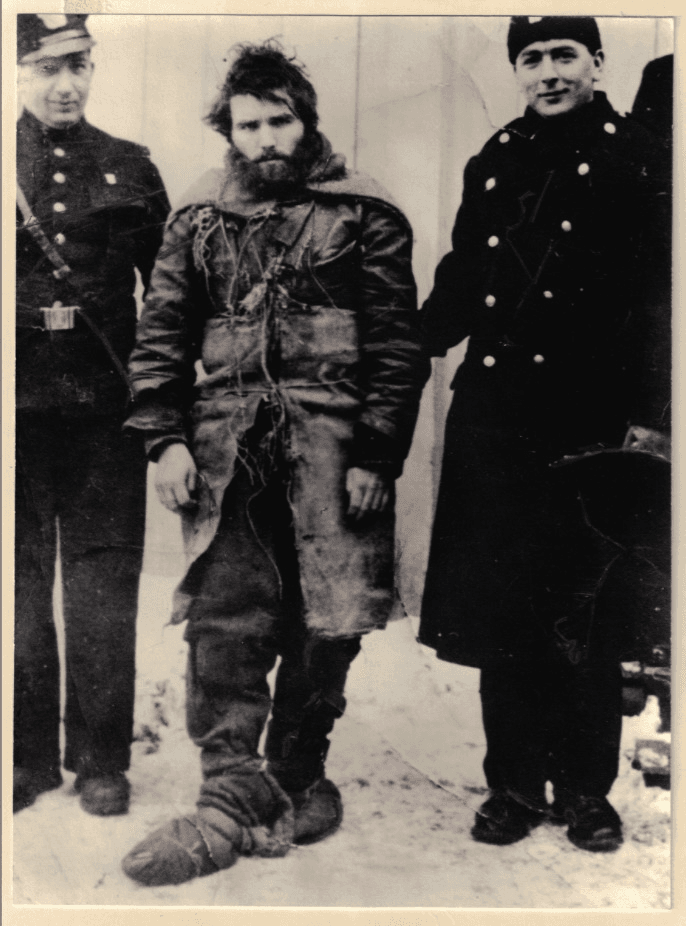
A dramatic turn came three years after the war ended, when a surprising message arrived from Russia: Vasili Rabkowski is alive. It turned out that for years he had been staying in one of the Soviet psychiatric hospitals – for many “missing” people, this place was often the end of their wartime wanderings.
How Was Such a Long Disappearance Possible?
- After the war, repatriation was chaotic, and prisoner identification systems were inefficient.
- Language and documentation problems meant that the missing could not contact their relatives for years.
There were more stories similar to Rabkowski’s in Central and Eastern Europe, and some came to light thanks to research and documentary films.
Return Home and Family Consequences
The moving return of Vasili Rabkowski was widely commented on in postwar Europe. For his family, it was a relief, but also a huge surprise after years of mourning and uncertainty. The local community organised a ceremonial welcome – Rabkowski, though free, had to learn about the world anew.
Rabkowski’s case was not an isolated one. In 2000, Hungarian András Toma returned home after 53 years spent in a Russian psychiatric hospital – he was recognised as the “last prisoner of World War II”.



Komentarze