Do you know that one day in history can contain an uprising that has changed the face of Europe, the discovery of a substance that has turned culture upside down, and the birth of a man who for centuries has remained the longest living man in the world? What happened that day in the history of April 19th is a question that guides us through centuries of dramatic events, surprising coincidences and moments that permanently entered the historical calendar. Get ready. — This day has a lot to tell.
What happened on April 19th? Major events in history
1775 – Battle of Lexington, the first shot for America's freedom
Today it is hard to imagine a world without the United States, and it all started on April 19. That day under Lexington, Massachusetts, British troops clashed with American militiamen, giving the first shots of the U.S. independence war. No one knew then that this local conflict would turn into a revolution that would change the political map of the world. Historians still argue, who gave up this famous "shot heard all over the world" — But the fact is, this day in history gave birth to a superpower.
1943 – The outbreak of the Warsaw Ghetto Uprising
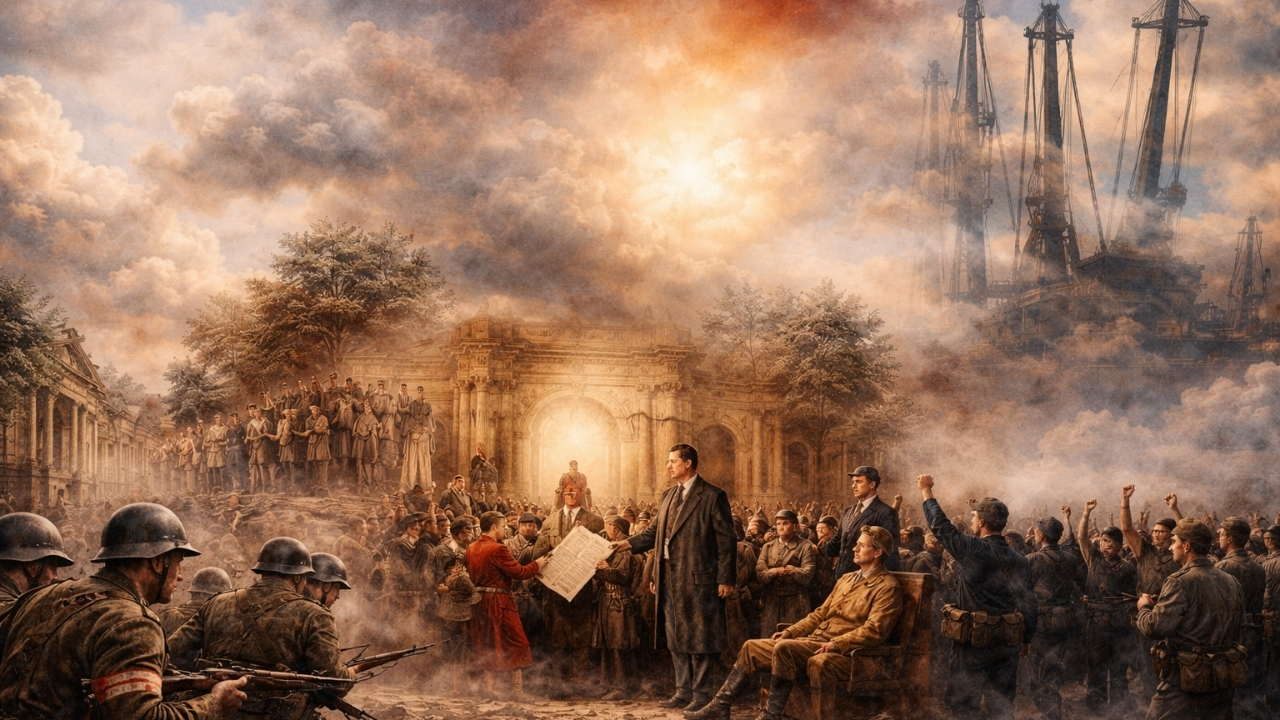
On April 19, 1943, on the first day of Jewish Pesach feast, several hundred poorly armed militants faced unequal fighting with SS troops and police. The Warsaw Ghetto Uprising was an act of desperate courage — Its participants knew that they had no chance of a military victory, but they fought for dignity and the right to choose their own death. The "Getto" National Army's action that day was to deliver weapons to insurgents through the district walls. This day in history is one of the most important symbols of resistance to Nazi genocide and that's why Poland celebrates April 19 as Holocaust Victims and Uprising Day in the Warsaw Ghetto.
1529 – The Birth of Protestantism as a Concept
Few people know that the word "protestantism" has its specific day of birth — And it's April 19th. During the session of the Reich Sejm in Spira, six princes and fourteen German cities formally protested against the pass prohibiting the transition to Lutheranism. From the Latin word "protestari" — protest — It is the name of a whole division of Christianity, which today has hundreds of millions of believers worldwide. This moment shows how one formal writing can change the course of religious history.
1943 – Albert Hofmann discovers LSD
The same day as the outbreak of the Warsaw Ghetto uprising brought a completely different but equally groundbreaking event on the other side of Europe. Swiss chemist Albert Hofmann discovered psychoactive properties of lysergic acid diethylamide — The substance we know today as LSD. Hofmann accidentally absorbed a small amount of compound through the skin and experienced the first ever "trip". This discovery over time influenced not only science and psychiatry, but also the entire culture of the 1960s protests — from rock music to the hippie movement.
1882 – The Death of Charles Darwin
On April 19, 1882, Charles Darwin died at his home in Downe, England. — a man who changed the way humanity understands itself and life on Earth. His theory of evolution, published in the work "About the Origin of Species" in 1859, sparked a scientific and intellectual revolution, the effects of which we still feel today. Darwin rested in Westminster Abbey, near Isaac Newton — Because that's how Britain honored its greatest thinkers. A better example is that the historical calendar is full of dates worth knowing.
1995 – Oklahoma City bombing
One of the most tragic acts of terrorism in the history of the United States took place on April 19. At 9:02 a.m. Timothy McVeigh detonated a trap truck at the federal Alfred P. Murrah building in Oklahoma City. 168 people were killed in the explosion, including 19 children in a schoolroom located in the building. The assassination shook America because its perpetrator was not a foreign terrorist, but a U.S. citizen, Gulf veteran guided by extreme right-wing ideology. What happened that day changed America's attitude to internal security forever.
1713 – Habsburg pragmatic sanction
Emperor Charles VI Habsburg signed a document on 19 April 1713 that shaped European policy for decades to come. Pragmatic sanction said the Habsburg estates were indivisible and could be inherited by women — which was a revolution in the then dynastic law. This act prepared the ground for the reign of Maria Teresa, one of the most important monarchs in European history. One signed document closed and opened the era at the same time — That's how history works.
1948 – Revealing the Ghetto Heroes Monument in Warsaw
Exactly five years after the outbreak of the uprising, on April 19, 1948, a monument to the Heroes of Ghetto was unveiled in Warsaw. The monument by Nathan Rapoport stood where the insurgents fought and died — and became one of the most important memorial sites in Poland and in the world. It was before this monument that German Chancellor Willy Brandt knelt in 1970 in a famous gesture of reconciliation. This day in history combined tragedy with memory, which obliges generations to follow.
1961 – Disasters in the Bay of Pigs
Three days after the operation began, on April 19, 1961, an invasion of Cuba in the Bay of Pigs was defeated. Armed by the CIA, Cuban migrants hoped to rise against Fidel Castro — Instead, they were broken up by government troops without the support of the United States, which did not decide to intervene directly. Failure became a huge diplomatic and military humiliation of the Kennedy administration. Paradoxically, it strengthened Castro's position and cemented Cuban communism for the following decades.
Born 19 April
David Ricardo (1772) – British economist and politician, creator of classical political economics, pioneer of labour value theory and international trade.
Getúlio Vargas (1882) – Brazilian politician and president, one of the most controversial and influential figures in the history of Brazil of the 20th century, called "The Father of the Poor".
María Sharapova (1987) – Russian tennis player, five-time Grand Slam tournament winner and one of the world's most recognizable sportsmen.
Kate Hudson (1979) – American actress, daughter of Goldie Hawn, best known for her romantic comedy and role in the film "Almost Famous".
Tim Curry (1946) – British stage and film actor, immortal due to the role of clown Pennywise in the adaptation of Stephen King's novel "To".
World events
1587 – Drake's Rally for Cadiz – The English fleet under Francis Drake destroyed several dozen ships in the Spanish port, delaying the construction of the Invincible Armada by almost a year.
1770 – James Cook sees Australia "Captain James Cook first saw the coast of the Australian continent, which started an era of European colonization of the fifth land.
1897 – Boston's First Marathon – Boston played the first ever Boston Marathon, which is today the oldest annual city marathon in the world.
1956 – Rainier III marries Grace Kelly – Prince of Monaco married Hollywood star Grace Kelly in a ceremony followed by millions of viewers around the world — one of the most fairy tale love stories of the 20th century.
2005 – Benedict XVI becomes Pope – German Cardinal Joseph Ratzinger was elected as the 265th Pope and took the name Benedict XVI, becoming the first German on the Holy See for over a thousand years.
April 19th is the day that — as our historical calendar shows — surprises with the wealth and diversity of events over the centuries. From the first shots in the struggle for freedom, through the greatest tragedies of the 20th century, to scientific discoveries and coronations — This day really has everything. Look tomorrow, because history doesn't know the day off from events worth telling.