Do you know that one day in history can contain the king's coronation, the death of a genius, the rise-up and the birth of a global sports star? That's exactly what the history calendar for May 2 offers us. — a day extremely rich in breakthrough moments that shaped Europe, Poland and the whole world. If you are wondering what happened that day in history, we have for you a unique overview of the most important events over the centuries. Buckle up. — This journey through time is worth every minute.
What happened on May 2nd? Major events in history
1519 – Death of Leonardo da Vinci
On that day, in 1519, the life of a man whose mind was ahead of the age by several hundred years ended in Amboise, France. Leonardo da Vinci — painter, sculptor, architect, designer and philosopher — He was 67 years old. The creator of "Mona Lisa" and "Last Supper" for the rest of his life filled the notebooks with sketches of flying machines, anatomic preparations and designs that the world understood only centuries later. His death is one of those moments in the historical calendar, which symbolizes the end of a Renaissance era.
1611 – The King James Bible goes to the hands of readers
It was on May 2, 1611 that the English - speaking Bible of King James, ordered by King James I Stuart for the Church of England, was published. The work translated by 47 scholars for almost seven years became one of the most influential books in the history of English. Her literary style for the following centuries shaped English, literature and culture around the world.
1808 – Rising in Madrid and the birth of guerrilla
When Madrid woke up on the morning of May 2, 1808, no one expected spontaneous rebellion against the French occupiers to change the history of Europe. Madrid Uprising — Violent and bloody — It started a war on Spanish independence which lasted six years and severely weakened Napoleon's power. It is from this fight that the word "guerrilla" is derived, meaning an irregular guerrilla war. Goya immortalized those tragic events in his most famous paintings.
1921 – The 3rd Silesian Uprising explodes
This day in history has written in gold letters in the history of Polish Silesia. On May 2, 1921, the 3rd Silesian Uprising broke out. — the largest and best organized of the three springs aimed at joining Upper Silesia to reborn Poland. The insurgents were led by Wojciech Korfanty, and several tens of thousands of people took part in the fight. Although militarized, the uprising was of great political importance — In 1922, part of Upper Silesia went to Poland.
1945 – Polish flag on the Victory Column in Berlin
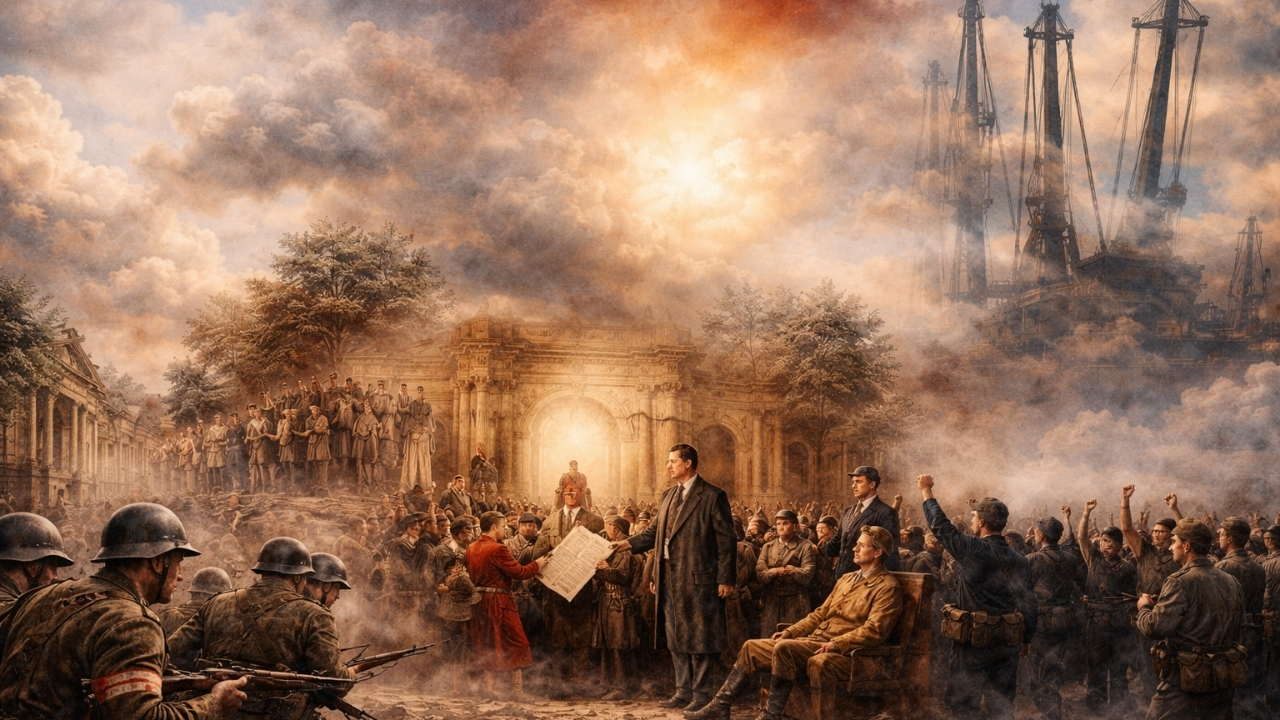
On the morning of May 2, 1945, the Red Army and the 1st Army of the Polish Army officially captured Berlin. Poles suspended the white and red flag on the Victory Column — a symbolic gesture that meant for many years the payment of Nazi occupation and the death of the Polish people. On the same day in Germany, the last troops defending the capital of the Reich capitulated. It's one of those moments in the historical calendar that's hard to describe without emotion.
1952 – Building of the Palace of Culture and Science in Warsaw
What happened that day in Warsaw in 1952? Construction of one of the most controversial buildings in Poland started — Palace of Culture and Science. Soviet architecture as a "gift of the Soviet nation to the Polish people" for decades has aroused extreme emotions: from resentment as a symbol of USSR dominance to acceptance as a recognizable element of the capital's panorama. Today PKiN is listed in the Register of Monuments and remains the highest building in Poland.
1982 – The sinking of the cruiser ARA "General Belgrano"
The British submarine HMS "Conqueror" torpedoed the Argentine cruiser ARA "General Belgrano" during the Falkland Islands War. 321 sailors died in the crash — This is the biggest one-time human loss on the Argentine side in this conflict. The sinking of the cruiser sparked huge controversy: the ship was at this point outside the exclusion zone announced by Britain, which sparked international disputes over the legality of the attack.
2011 – End of Usama ibn Ladina
This day in history has been recorded as a landmark moment in the global war on terrorism. On May 2, 2011, (according to local time in Pakistan) American special forces killed Usama ibn Ladina — founder of Al-Qaeda and chief architect of the September 11, 2001 bombings — in his hideout in Abbottabad near Islamabad. Operation codenamed "Neptune Spear" lasted only 40 minutes and was the result of many years of intelligence.
Born 2 May
Catherine II the Great (1729) – Empress of Russia, one of the most powerful women in history who ruled the empire for over three decades and significantly expanded its boundaries.
Manfred von Richthofen (1892) – legendary German pilot of World War I called the "Red Baron", who shot down 80 enemy aircraft and became a symbol of aerial heroism.
David Beckham (1975) – English footballer, one of the largest icons of football in the late 20th and 21st centuries, known both for his extraordinary talent for free throws and for his global recognition as a pop culture icon.
Theodor Herzl (1860) – Austrian journalist of Hungarian-Jewish origin, creator of the modern Zionist movement and chief ideologist of the pursuit of the establishment of the Jewish state, which was realized in 1948 as Israel.
Dwayne Johnson (1972) – American actor and former wrestling wrestler known as "The Rock", one of the most recognizable faces of Hollywood and the best-paid actors in the world.
World events
1536 – Arrest of Anna Boleyn – The second wife of King Henry VIII of England was incarcerated at the Tower of London, where she found herself on the scaffold less than two weeks later.
1670 – Hudson Bay Company Formation – one of the oldest still operating corporations in the world was established, which controlled fur trade in North America for centuries.
1808 – Uprising in Madrid – a revolt broke out against Napoleonic occupation troops that started a guerrilla war and permanently entered history as a symbol of national resistance.
1945 – Obtaining Berlin – Allied forces officially took control of the capital of the Third Reich, which was one of the last acts of World War II in Europe.
1989 – Hungary opens the border with Austria – The Hungarian authorities abolished restrictions on border traffic with Austria, which was the first symbolic breach in the Iron Curtain and announced an avalanche of changes that soon swept the entire eastern block.
May 2 is a day that proves that history never sleeps — from Renaissance geniuses, through national uprisings to the operations of special forces in the 21st century, what happened that day over the centuries can take breath away. It's a real treasurer for anyone who values a living historical calendar. Look tomorrow — May 3 has just as much to tell us.