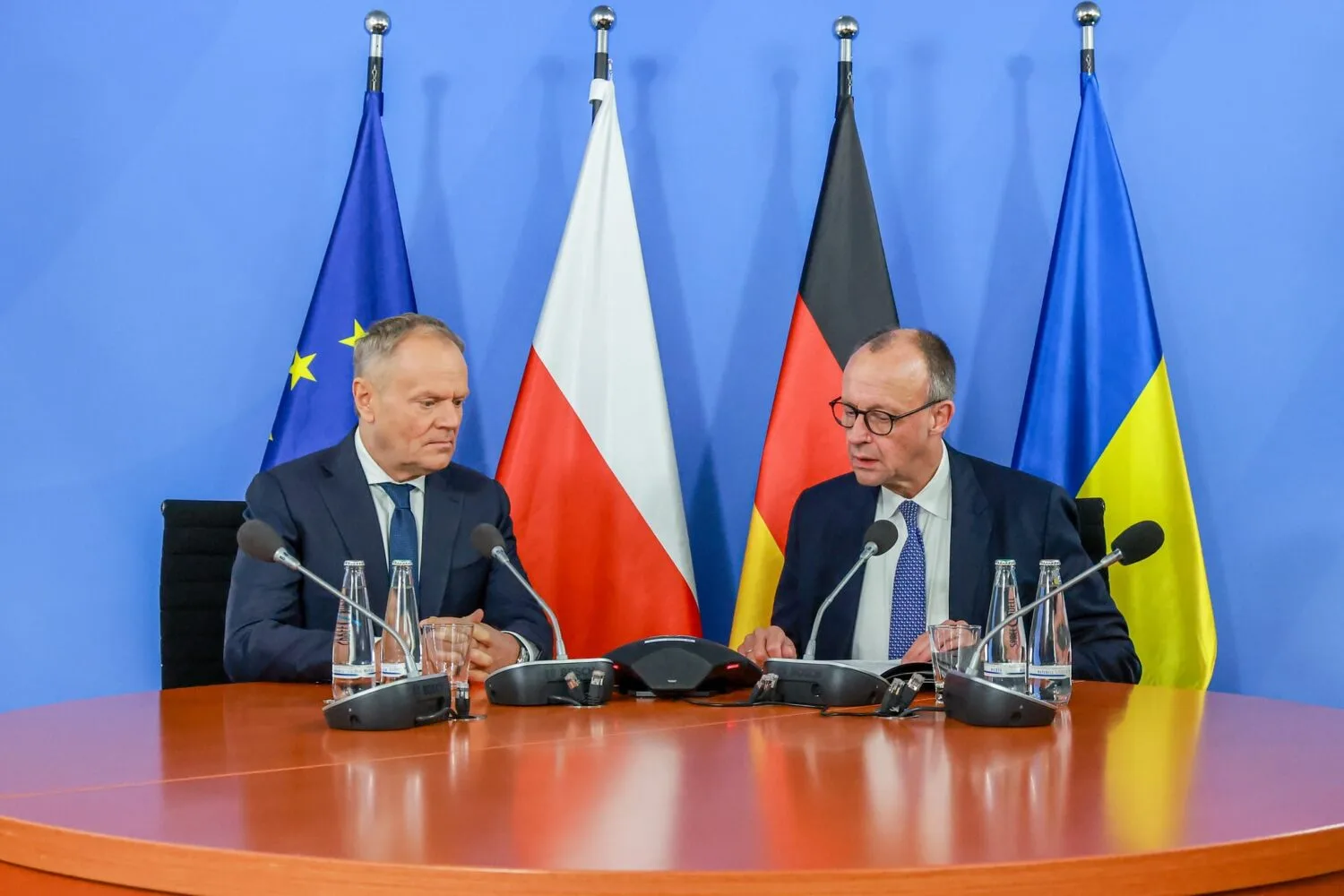
Premier Donald Tusk i Kanclerz Niemiec Friedrich Merz | Berlin 12.01.2025 | Fot.: flickr.com premierrp
During Polish-German intergovernmental consultations in Berlin, Prime Minister Donald Tusk made a firm appeal to the German side regarding compensation for surviving Polish victims of World War II. The Polish head of government stressed the urgent need for action, pointing to the shrinking number of people entitled to compensation. If Germany does not make a swift declaration, Poland will consider paying out funds from its own budget – Tusk said at a joint press conference with German Chancellor Friedrich Merz.
The issue of war reparations and compensation for victims of German crimes remains one of the most difficult topics in Polish-German relations. Germany consistently maintains that the matter is closed from both a legal and political standpoint, citing the 1953 declaration in which the People’s Republic of Poland – under pressure from the USSR – waived reparation claims. As Chancellor Merz stressed, Germany acknowledges its historical responsibility and is engaging in dialogue with Poland to find solutions. „The process of commemorating the victims and confronting history is never complete” – Merz said, adding that Germany has in the past provided survivors of Nazi terror with around 2 billion euros.
Prime Minister Tusk firmly rejected this position, recalling that in the 1950s Poland was not a sovereign state and the decision to waive reparations did not reflect the will of the nation. „Poland has not received compensation for losses and crimes from the time of World War II” – Tusk stated, stressing that this view is widely shared in Polish society, regardless of political divisions.
Urgent appeal: „Hurry up”
Tusk devoted particular attention to the surviving victims of the war. According to estimates by the Polish-German Reconciliation Foundation, there are currently about 50,000 of them – a year ago there were still 60,000. „Hurry up, if you really want to make such a gesture” – he appealed to the Germans, pointing to the passing time. The prime minister announced further talks on the subject later the same day, but warned: „If we do not obtain some quick and unambiguous declaration, I will consider next year a decision that Poland will meet this need from its own funds„.
Tusk w Berlinie o niemieckim zadośćuczynieniu dla ofiar wojny: pospieszcie się; jeżeli nie uzyskamy szybkiej deklaracji, będę rozważał, że Polska wypełni tę potrzebę z własnych środków#PAPinformacjepic.twitter.com/f2OIL6E89b
— Polska Agencja Prasowa/Polish Press Agency (PAP) (@PAPinformacje) December 1, 2025
Tusk also referred to the „compensation gesture” of 200 million euros that Germany proposed a year ago, which the Polish side considered a symbolic and insufficient amount.
Political and expert reactions
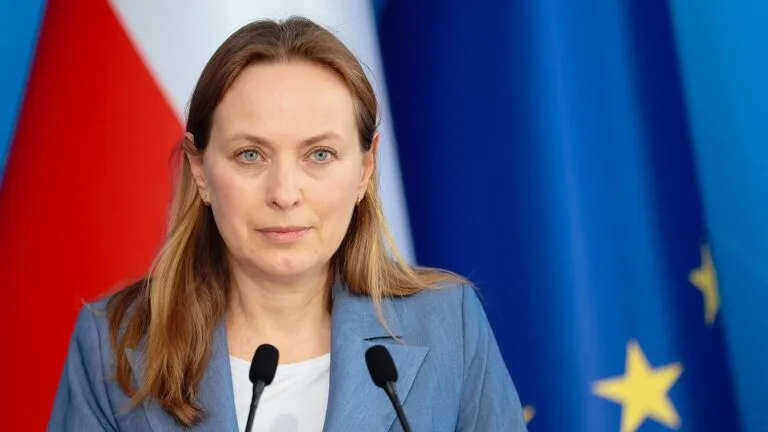
Prime Minister Tusk’s remarks triggered immediate reactions in Poland. Head of the Chancellery of the Prime Minister Jan Grabiec said Chancellor Merz perceived them as a „barely diplomatic jab”. Meanwhile, head of the President’s Chancellery Zbigniew Bogucki called the idea of paying compensation from Polish funds „fatal”. „It’s as if someone injured in an accident were told that compensation should be paid not by the perpetrator, but by his family” – Bogucki commented.
Zadośćuczynienie i odszkodowanie to obowiązek Niemiec Płaci zbrodniarz, nie ofiara‼️To hitlerowskie Niemcy napadły na II Rzeczpospolitą. I to Niemcy byli zbrodniarzami, a Polacy ofiarami‼️
A dziś słyszymy, że za odszkodowania za tamte zbrodnie mamy… zapłacić my sami. To tak… pic.twitter.com/V03BmYdAFV
Broader context of the intergovernmental consultations
The Tusk-Merz meeting took place within the framework of Polish-German intergovernmental consultations, which also covered other topics, such as support for Ukraine, energy security and economic cooperation. Despite historical tensions, both leaders expressed a desire to deepen bilateral relations. Chancellor Merz emphasised that Germany and Poland are close allies in the EU and NATO, and that dialogue on difficult topics is essential for the future.
In German media, Tusk’s remarks were widely quoted, with emphasis on the appeal for haste. According to polls, 60 percent of Germans believe their country has done enough on compensation, which contrasts with the Polish expectation of justice. In Poland, the reparations debate revived after the change of government in 2023, although the previous PiS government demanded considerably higher sums.
On social networks such as X (formerly Twitter), Tusk’s statement drew mixed reactions – from criticism of the idea of self-financed payments to support for pressure on Germany. One user wrote: „Poland. The first country in the world that pays reparations to itself„.
Former Prime Minister Mateusz Morawiecki wrote on X:
German crimes are German responsibility. They must be compensated, but not at Poland’s expense! Why does the Civic Coalition government once again choose Berlin’s interests over Warsaw’s?
Memory, truth and justice! Germany must pay for its crimes. Let the government finally stand up for Poland, rather than bowing its head before Berlin!
😠 Niemieckie zbrodnie to niemiecka odpowiedzialność. Muszą zostać zadośćuczynione, ale nie kosztem Polski! Dlaczego rząd Koalicji Obywatelskiej znów wybiera interes Berlina, a nie Warszawy? 🤔 🇵🇱 Pamięć, prawda i sprawiedliwość! Niemcy muszą zapłacić za swoje zbrodnie. Niech… pic.twitter.com/hi3tyI1clz
Prime Minister Tusk’s appeal underlines the urgency of a matter in which time plays a key role. With the number of surviving witnesses and victims of World War II dwindling, Poland is signalling readiness for independent steps, which could set a precedent in international relations. Will Germany respond to the call? The coming months will show whether dialogue brings concrete solutions or whether the historical conflict remains unresolved.