

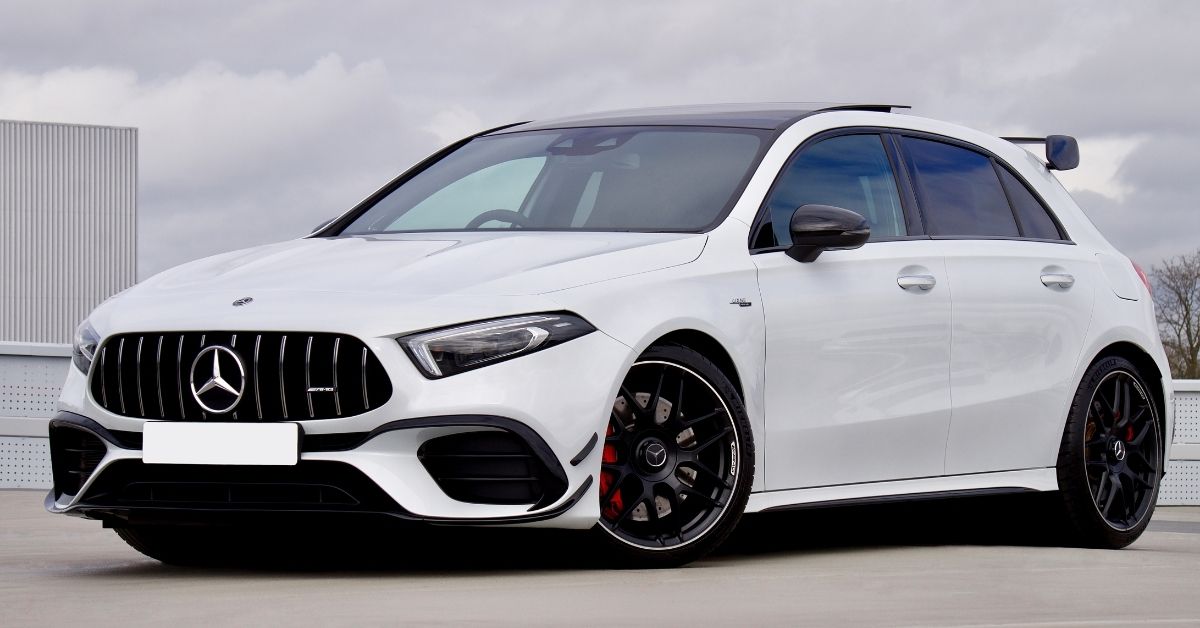
The automotive world is in uproar after Mercedes-Benz announced plans to move production of its popular A-Class model from the German plant in Rastatt to the Kecskemet plant in Hungary. The change, due to take effect as early as the second quarter of 2026, could mean a dramatic loss of up to 20,000 jobs in Germany. What prompted the carmaker to take this step, and what will the consequences be for the European labor market?
Mercedes' Decision: From Rastatt to Kecskemet
Mercedes-Benz has confirmed that A-Class production, until now carried out in Rastatt, Germany, will gradually be moved to Kecskemet, Hungary. The Kecskemet plant, Mercedes’ largest production site in Europe (only its plant in China is bigger), already celebrated the production of its two-millionth vehicle in October 2024. From 2026, the Kecskemet factory will produce not only cars with combustion and plug-in hybrid engines but also fully electric vehicles. Alongside the A-Class, the electric GLB and the new C-Class will also be built at the same site, further strengthening Hungary’s position as a key automotive hub.
The transfer of production is expected to take until 2028 and is part of a broader cost optimization strategy. The Hungarian plant currently employs more than 5,000 people and was named “Most Attractive Employer” in 2024. Mercedes also plans to open its first research and development center there, which will further boost the local economy.
Dramatic Consequences for Germany: 20,000 People Out of Work
The most painful aspect of this decision is the potential loss of jobs for around 20,000 German workers. In 2023, Germany already lost 120,000 jobs in the manufacturing sector, and now the situation may get worse. AfD politician Christian Abel commented on the platform X: “Mercedes-Benz has for decades symbolized German engineering excellence and Germany’s economic development. However, like many other car manufacturers, the company is cutting jobs in Germany and expanding its operations in other countries. As a result, all A-Class production is moving to Hungary. It is expected that 20,000 employees will lose their jobs.”
Abel blames the government’s “green climate and energy policy” and calls for radical changes, such as ending the energy transition, lifting the ban on combustion engines, and eliminating emission limits. He stresses that without this, Germany may lose its appeal as an industrial location and even consider “Dexit” – leaving the EU.
Why Hungary? The Secret of Orbán's Success
Hungary is thriving thanks to the economic policy of Prime Minister Viktor Orbán, based on political stability, low taxes and a skilled workforce. Trade Minister Péter Szijjártó confirmed Mercedes’ decision, stating: “Hungary demonstrates economic brilliance at a time when all of Europe suffers from the consequences of the war in Ukraine and the misguided policies of the EU headquarters in Brussels”.
This is not the first time German automotive giants have invested in Hungary. In December 2025, an expansion of the Rheinmetall factory in Szeged was announced, which will create more than 300 new jobs in the high-tech sector, including electromobility and renewable energy. The Hungarian government supported the investment with 13 billion forints, emphasizing Hungary’s role as a center of future technologies.
Broader Context: Crisis in German Industry
Mercedes’ decision fits a broader trend in which carmakers are cutting costs in Germany and looking for cheaper locations. High energy costs, EU regulations and global competition are making Germany less attractive. In 2024 and 2025, the German automotive sector was hit by a wave of layoffs, and moving production to Hungary may be a signal for other companies.
Is this the end of the era of German dominance in the automotive industry? For now, Mercedes says the move aims to improve efficiency, but for thousands of families in Rastatt, it is a cold reality.
Sources: Merkur.de, Reuters.com, Rmx.news, Msn.com




Komentarze