

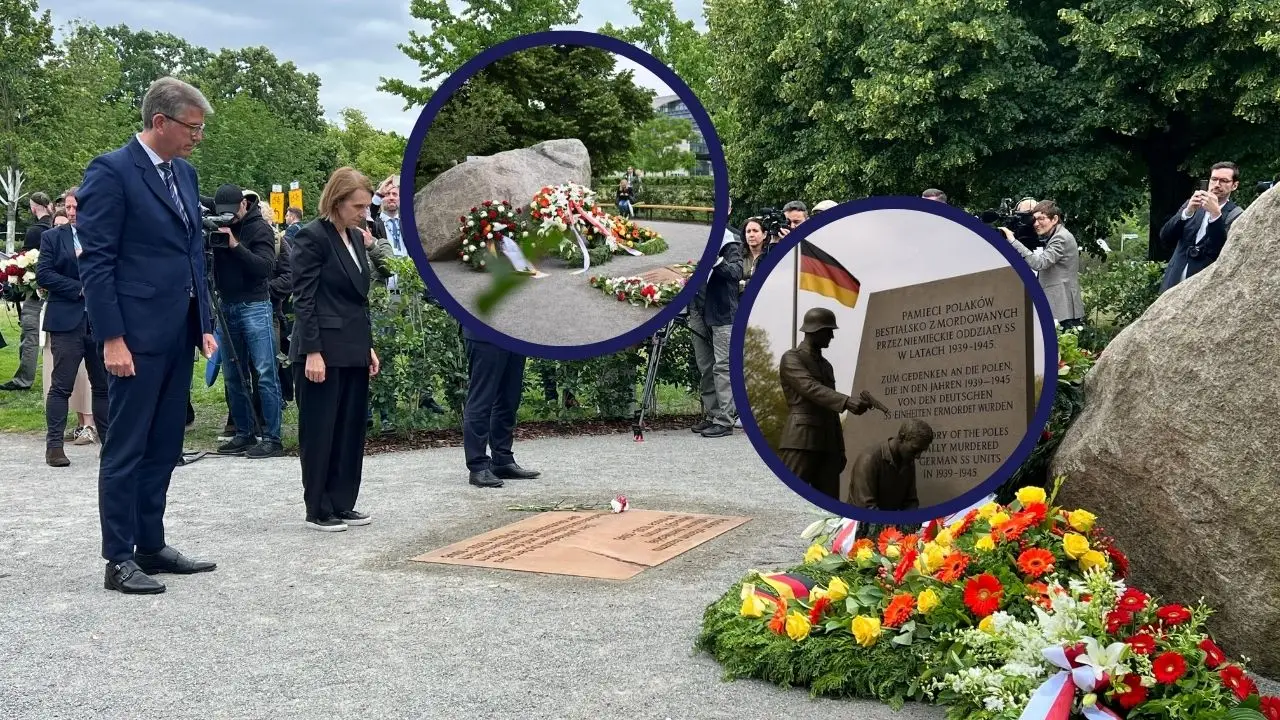
A temporary memorial – a massive boulder – commemorating Polish victims of World War II has been unveiled in Berlin. Is such a gesture enough to close the issue of reparations and properly honor the millions of Poles murdered? Is it genuine remembrance, or rather a symbolic “spit in the face”?
Boulder in Berlin – gesture or makeshift solution?
On 16 June 2025, at a symbolic location – the site of the former Kroll Opera House, where Hitler announced the attack on Poland – a boulder weighing almost 30 tonnes was unveiled, bearing a plaque dedicated to Polish victims of Nazism and German occupation. The initiative, though long awaited, has stirred mixed feelings in Poland. For some commentators it is the first real step toward commemoration; for others it is a makeshift solution that fails to reflect the scale of Polish losses and suffering.
Minister Wróblewska's controversial footwear
During the unveiling ceremony of the boulder commemorating Polish victims of World War II in Berlin, the choice of footwear worn by Hanna Wróblewska caused considerable controversy. The Minister of Culture appeared in sneakers, which immediately became the subject of criticism on social media. Some commentators considered the outfit inappropriate and unworthy of the event’s significance, calling it a “disgrace” and a “shame”.
What does the commemoration look like?
- A boulder with a plaque in three languages (Polish, German, English)
- A symbolic location – where German aggression against Poland began
- A planned permanent memorial and a German-Polish House, which is also meant to serve an educational and integrative function
Does the boulder close the reparations issue?
In Germany, the question of reparations for Poland is regarded as legally closed. The new Chancellor, Friedrich Merz, clearly stated during his visit to Warsaw that “the reparations issue is closed”. Poland – according to a 2022 report – demands more than 6 trillion złoty from Germany for wartime destruction, yet Berlin does not intend to enter into negotiations on the matter.
Internet users' suggestions for what the memorial should look like
Internet users quickly seized on the topic of the boulder and proposed what, in their view, the memorial should look like
What are German and Polish media saying?
- German media acknowledge that gestures and words of contrition are not enough – “Der Spiegel” writes that Germany will be “morally defeated” if it does not take real financial action toward Poland, Italy or Greece.
- In Poland, the prevailing sentiment is that the boulder is not enough. Opposition politicians and internet users criticize the symbolic gesture, pointing to the lack of real compensation and the delays in building a proper memorial.
Is Germany mocking us?
Online, there is no shortage of voices claiming that such a memorial is a “spit in the face” and an attempt to settle the matter with one stone. Questions are being asked: “Is this a metaphor for Warsaw being left without one stone upon another?” – commented internet users. Opposition politicians stress that, 80 years after the end of the war, such a gesture is insufficient and belated.
Reparations – where are the billions for Polish losses?
Poland, despite the passage of decades, has not received compensation from Germany for wartime destruction. The material and human losses are hard to imagine – every Polish family was affected by the occupation. Germany consistently refuses to pay reparations, citing Poland’s alleged waiver of them in 1953, although historians stress that the government of the time had no democratic legitimacy.
Key figures:
| Poland’s losses in World War II | Estimated value (2022) |
|---|---|
| Human losses (murdered Poles) | approx. 6 million |
| Material losses | over PLN 6.2 trillion |
Symbol or real change?
The temporary memorial in Berlin is a step toward commemorating Polish victims, but it closes neither the reparations issue nor the debate on Germany’s responsibility. For many Poles, it is an insufficient gesture – we expect not only symbols but also real action, including financial redress for the losses and suffering of millions of compatriots.
True reconciliation requires more than a stone – it requires courage, honesty and readiness to face the past. Is Germany ready for this? Time will tell.



Komentarze