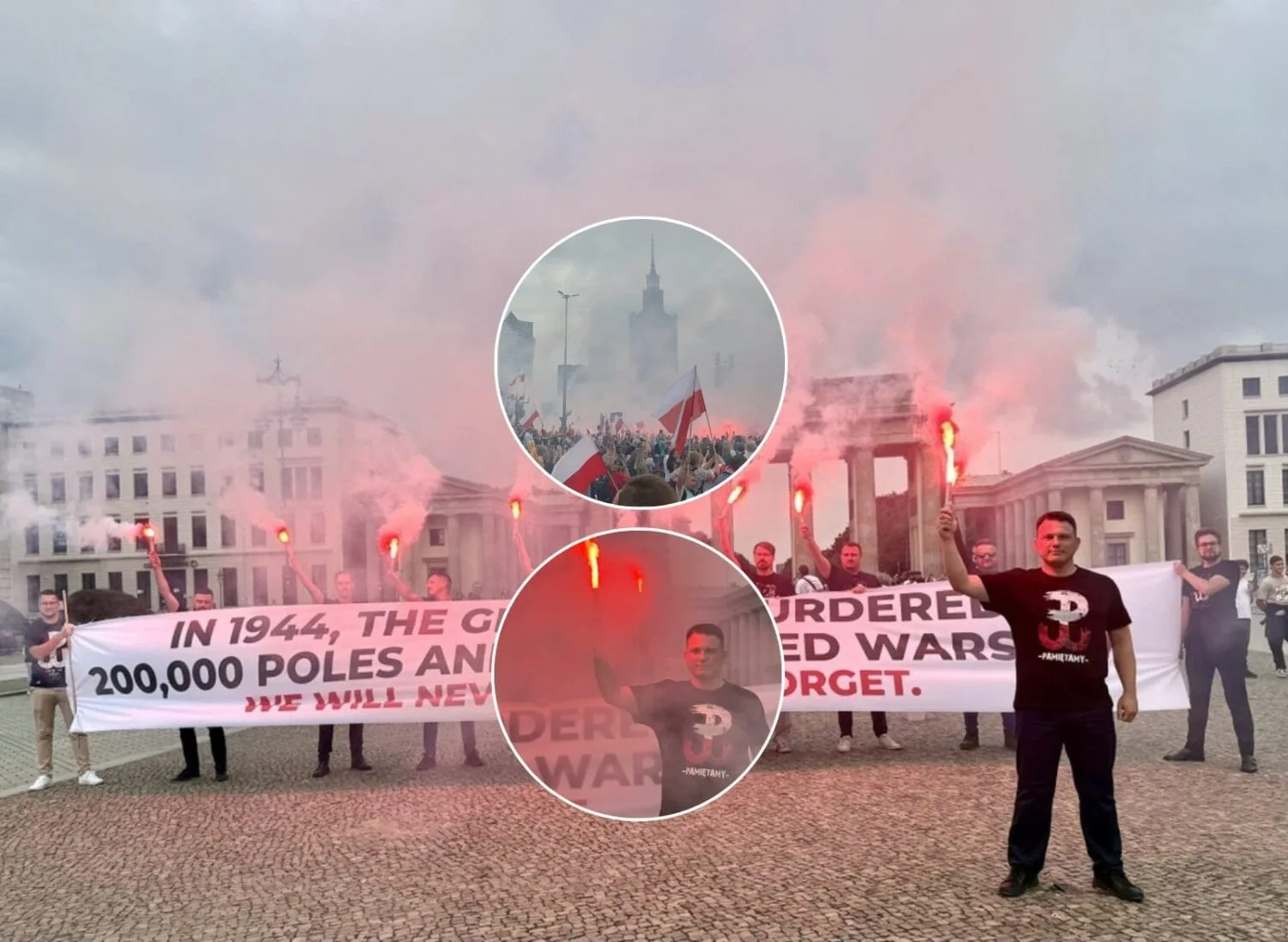
On the 81st anniversary of the Warsaw Uprising, Sławomir Mentzen, leader of Confederation and MP of New Hope, staged a high-profile action in Berlin honouring the victims of this tragic event. In front of the Brandenburg Gate, one of Germany’s most recognisable symbols, Mentzen and a group of Polish parliamentarians unfurled a large banner reading: „In 1944 Germans murdered 200,000 Poles and completely destroyed Warsaw. We will never allow them to forget this”.
The action carried strong symbolic weight – the event took place at precisely „W-Hour”, that is at 5:00 p.m., which further underscored the significance of the message directed at both Poles and Germans. In his speeches, Mentzen stressed that the memory of the crimes and the immense suffering of the Polish nation during the war, particularly in 1944, must not be forgotten or passed over in silence.
The politician also noted that the actions in Berlin were intended to strengthen historical awareness on the international stage – to recall the scale of the destruction and the tragedy of Warsaw, as well as Germany’s responsibility for those events.
On 1 August 2025 we mark the 81st anniversary of the Warsaw Uprising – the heroic zrywu of the capital’s residents against German occupation. Every year we return to those moments, because remembrance of the Insurgents is for us a lesson in courage, sacrifice and care for freedom.
During the Warsaw Uprising Germans murdered 200,000 Poles and completely destroyed Warsaw. We will never allow them to forget this! That is why, on the 81st anniversary of the Warsaw Uprising, together with the MPs of New Hope we honoured the memory of the Insurgents under the Brandenburg Gate in Berlin – Sławomir Mentzen
Podczas Powstania Warszawskiego Niemcy zamordowali 200 tysięcy Polaków i doszczętnie zniszczyli Warszawę.
Nigdy nie pozwolimy im o tym zapomnieć!
Dlatego w 81. rocznicę wybuchu Powstania Warszawskiego razem z posłami Nowej Nadziei uczciliśmy pamięć Powstańców pod Bramą… pic.twitter.com/6g807W8ZcQ
At 5:00 p.m., in the symbolic „W-Hour”, sirens sounded across Warsaw and many other cities. Traffic came to a halt, and residents silently paid tribute to the fallen.
Powstanie, które zmieniło Warszawę
The Warsaw Uprising broke out on 1 August 1944 and lasted 63 days – becoming the largest armed action of the underground in occupied Europe. According to various sources, up to 200,000 Warsaw residents died during the fighting, the vast majority of them civilians. The city was razed to the ground – nearly 80% of the buildings on the left bank of Warsaw were destroyed.
Heroes never die in vain. In 1944 our pain was real, so was our dream of freedom. 🔹Share the memory lest it fades away🔹
— Warsaw Rising Museum (@WarsawRising44) July 31, 2025
Skala strat i zniszczeń
Liczba ofiar
Skala zniszczeń miasta
ok. 16 000 poległych Powstańców
ok. 80% zabudowy lewobrzeżnej Warszawy
do 200 000 zamordowanych cywilów
hundreds of priceless historic monuments destroyed
The Wola massacre, mass executions, and the expulsion of over half a million residents are tragedies that Poles do not forget.
On 1 August 1944 at 5:00 p.m. the Uprising began, lasting 63 days.
Up to 200,000 people were killed, and the city was almost completely destroyed.
„W-Hour” and the collective singing of the „banned songs” are today an inseparable part of Polish identity and memory.
Pamięć to nasz wspólny obowiązek
Commemorating the Warsaw Uprising is not merely a routine gesture – it is a reflection on the value of freedom and the immense price our ancestors paid. Thanks to them we can live in a free country, and their history should inspire us every day to civic engagement and mutual respect.